Why Write
 Several weeks after I buried my father, I couldn’t get the sounds of his dying out of my ears. Perhaps if he had died peacefully, the sound of his voice, or his belly laugh, anything but his violent end from pancreatic cancer, would have filled my ears instead. But no, the last word I heard him utter before he slipped into a coma was an anguished “Why?” Hours later, his last hours, his breaths became enormous gasps, so strong that they lifted his body from the bed.
Since childhood, I have used writing to order a world that I love but that is sometimes hard to understand. A few weeks after my father died, I began to write his death. I wrote for days, without stopping, because back then I didn’t have children who needed me. I had only myself and time to sort it all out. I didn’t worry about the impact of my words on anyone, least of all my father, and not just because he was dead and could not protest. My father was one of my biggest fans. He may not have always understood the intricacies of my scholarly/writerly life, but his support was unwavering. He never questioned or criticized my choices. He would have honored my need to write and blessed the journey, as foreign as that journey must have been to him.
When I sat down to the story of his death, what I did not yet have was distance. Trying to make art out of life when you’re in the thick of life is a difficult endeavor. I’m not talking about writing in a journal or a diary, the writing you do for yourself and not for an audience. Art is about an audience, and when you write your life into art, you are writing primarily for others. Those others expect a certain level of fair and honest reflection, especially in essay writing, my genre of choice. They expect some perspective. I had to force an understanding on my father’s death when I was still struggling to make sense of it, when my grief was still so raw. Ultimately, I think the essay worked although it took no small effort to wrench it into shape. The editors of Fourth Genre, one of my favorite creative nonfiction journals, picked it up, and it later made its way into the “Notable Essays” section of The Best American Essays 2003.
Writing my adoption and reunion story has been far trickier than anything I’ve ever written. The people connected to my story are alive and well (thankfully!), and they have their own stories to tell, their own feelings to share, their own perspectives to offer. The parts of the story that each of them owns sometimes bump into the parts of the story that I own, and it requires a delicate dance. Early in the process, I inadvertently stepped on toes as I figured this out. Even now, as I continue to turn my life over in order to make art of it, people go tumbling about in the process, no matter how careful I try to be. What I write has hurt people, or angered them–and they’ve told me so. Their criticism–not of my writing but of the person I am behind the words–wounds me back. It’s a paralyzing, painful process.
In my lowest moments, I tell myself that I could stop this story. I could stop writing. It would surely save a lot of heartache. I’m not sure that it would ultimately repair any damage, or inspire any further growth, but it certainly would not cause any further distress to already fragile relationships.
 But something compels me to keep going, and it’s not just my own sometimes inexplicable desire to make sense of my part of this story. I also believe that in writing my story, I might help others make sense of theirs, no matter if they have been affected by adoption or not.
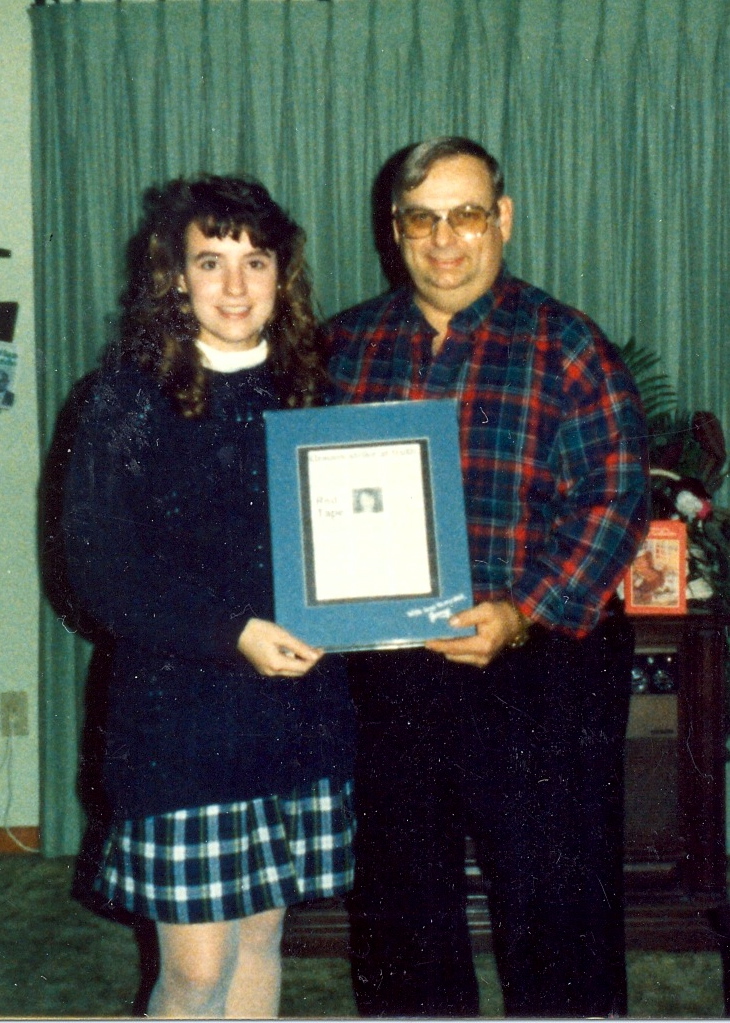
My dad wasn’t perfect, but he was an honest man, a good man. He lived a simple life, a faithful life, a true life.
When I reach for this difficult story, when I begin to write again, his face is the one that appears before me. He died before the ending, before he could meet my birth parents and my birth brother and their extended family, before he could be a part of both the joy and the pain of the last few years. But he is still here, nodding in approval. He is telling me to write. He is telling me to keep going. He is telling me to be true. His hand is on my shoulder, that thick, tanned hand, rough from his hard work as a laborer, but gentle in its touch. When I close my eyes, I can almost feel it there.
Silence
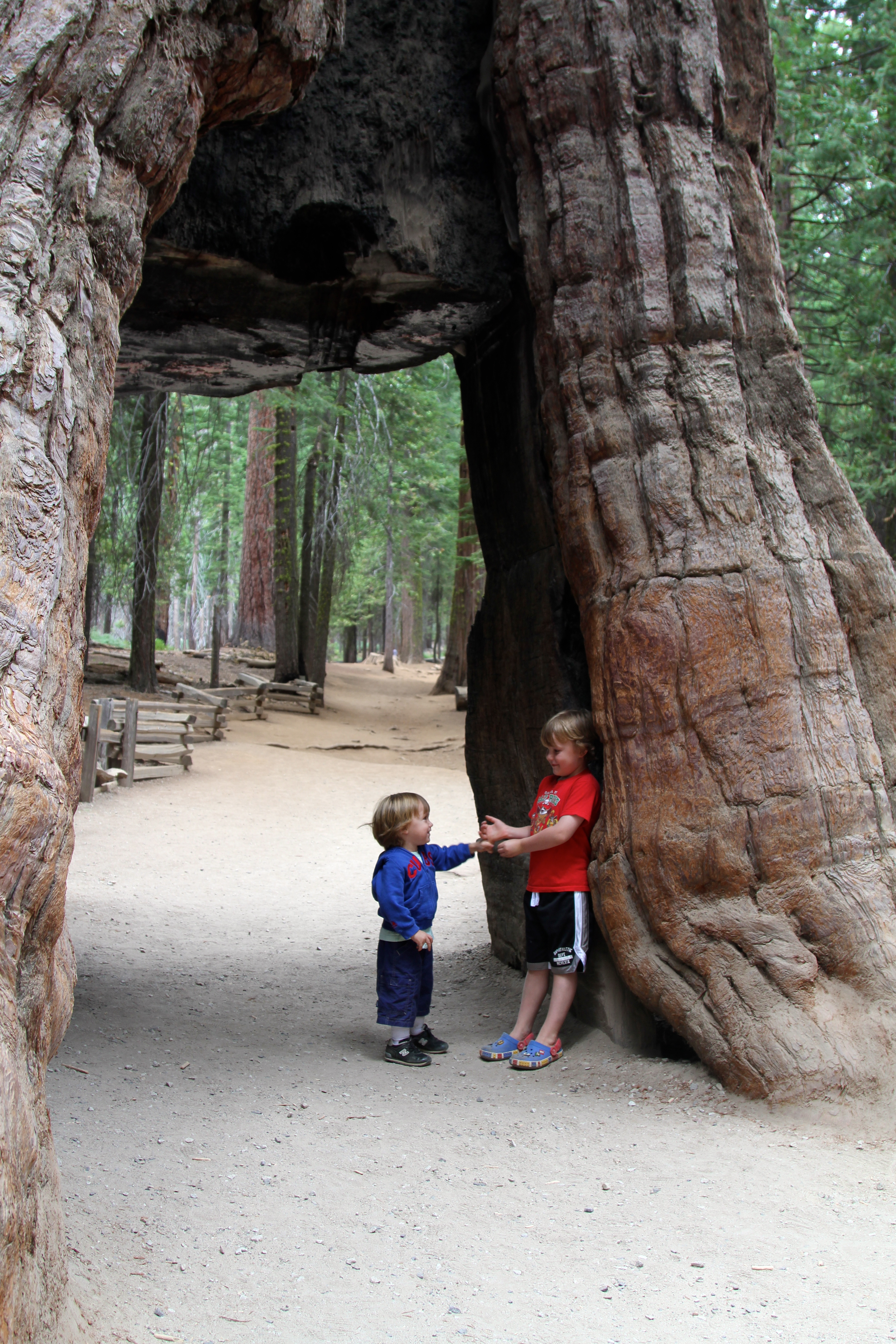 One week after arriving home from my trip to North Dakota, we took off for California. We visited my husband’s family in Los Angeles, then made our way to Lake Tahoe, by way of Yosemite National Park, to celebrate my mom’s 70th birthday. Thirty-six hours after we returned to Philadelphia, my semester kicked off, and the boys soon returned to school, too.
Somewhere in that mix of traveling with family and the return to reality, in the rush to keep it all together, my story fizzled. When I try to find my way back to it now, I struggle to look anywhere but ahead. I’m reminded of the drive out of the eastern side of Yosemite, the curly drop from nearly 10,000 feet, as you make your way on Highway 120 toward Lee Vining. The only way not to lose your nerve on this narrow road that skirts 2,000-foot drop-offs is to keep your eyes glued to the view in front of you. In most places, there are no guard rails and only a wisp of a shoulder between you and the fall to the bottom. Such blinding, disorienting beauty, but especially so if you attempt to look down or back.
Given the hantavirus outbreak that continues to plague Yosemite, I’m glad we only passed through the park in a day, opting not to camp this time. We told ourselves that some day we would return, and linger, some day when nobody in our mini van was potty training or insisting flip-flops are acceptable for hiking. We’d leave the iPads at home so the kids would be forced to stare appreciatively out of their windows at the breath-taking scenery, just as we’d been forced to do on family vacations in the ancient time of B.D., Before Devices. It took us over seven hours to make our way across the park with short stops and mini hikes along the way. Seven hours, boys. Don’t blink.
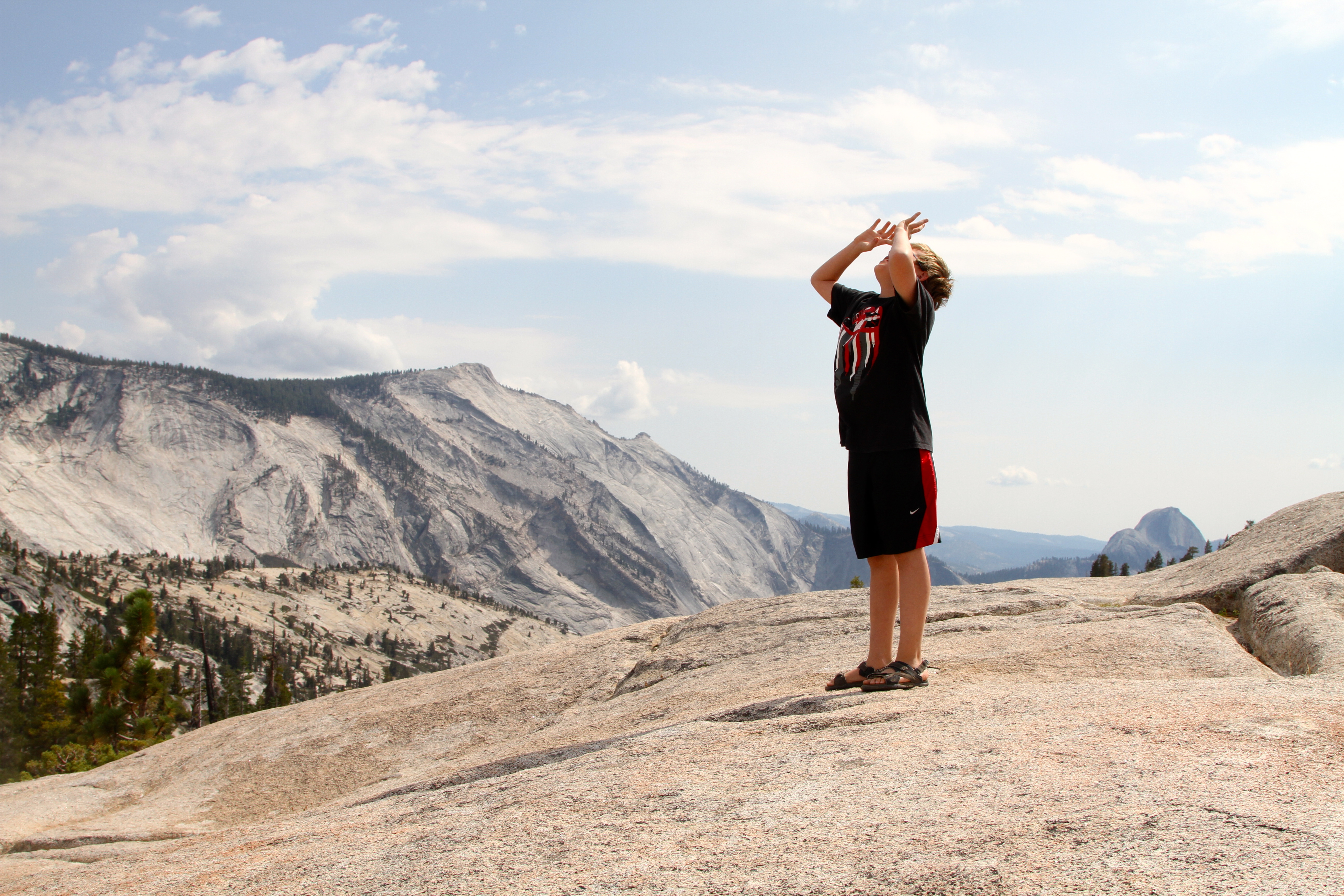
 People describe the astounding scenery in Yosemite as jaw-dropping, and they’re right. It’s hard to talk with your mouth hanging open, though, and that was my best discovery in Yosemite: a profound quiet. For the first time in many months, I had nothing to say. The ancient, towering sequoias in the Mariposa Grove quieted me with their 2,000-year-old wisdom, making any profundities I might have offered sound like baby’s bleats. Hours later, on the other side of the park, climbing with the kids on the rocks at Olmsted Point, I realized I was actually grateful for the silence, and the perspective. From the vantage point at Olmsted, where at times you feel as if you are teetering on the edge of the world, I liked feeling quiet, and small. This story of adoption and reunion that has consumed me the past few years took a back seat to a much grander picture.
Only when I pick up my writer’s magnifying glass to examine this part of myself more closely does it fill the entire lens. I’ll pick it up again soon. I do care about what’s there.
But I’m also tired right now. Bone-tired. For a brief time, standing in one of the most beautiful places on earth, I was glad to be whole again, not fractured by scrutiny, glad to take my place in a story far bigger than my own, and to simply live it.
Imprint
The morning after we arrived in North Dakota, I uncurled myself from my sleeping son, slid on my running shoes, and stepped outside into the warm sun rising over the flat fields surrounding the farm where my birth mother grew up.
It had rained in the middle of the night, a long soaking thunderstorm that settled the dust on the gravel road in front of the property. My birth parents’ rental car had kicked up such a cloud as we first followed them to the farm that my sister and I could barely see. We slowed and backed off, keeping them just in sight as they swirled forward. The next morning, though, the prairie had been washed clean in a bright do-over.
With a determined stride, I turned left onto the first road I came to, just as my birth mother had advised the night before. The farmland here is divided into square miles, she told me. As long as I kept making lefts around the 640-acre square that enveloped her family home, I wouldn’t get lost in the endless fields that yawned and stretched on all sides in a disorienting sameness to someone from the outside.
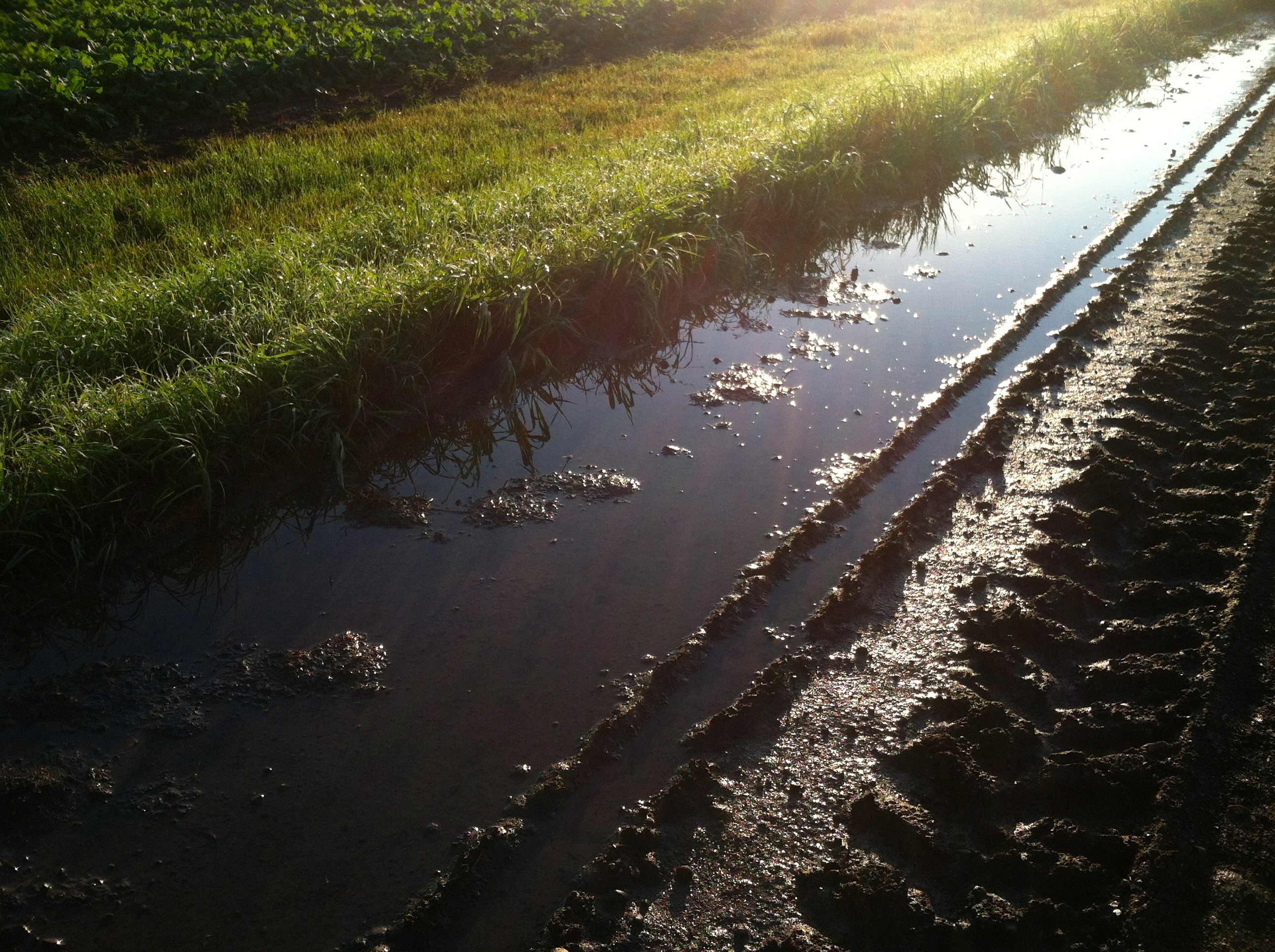
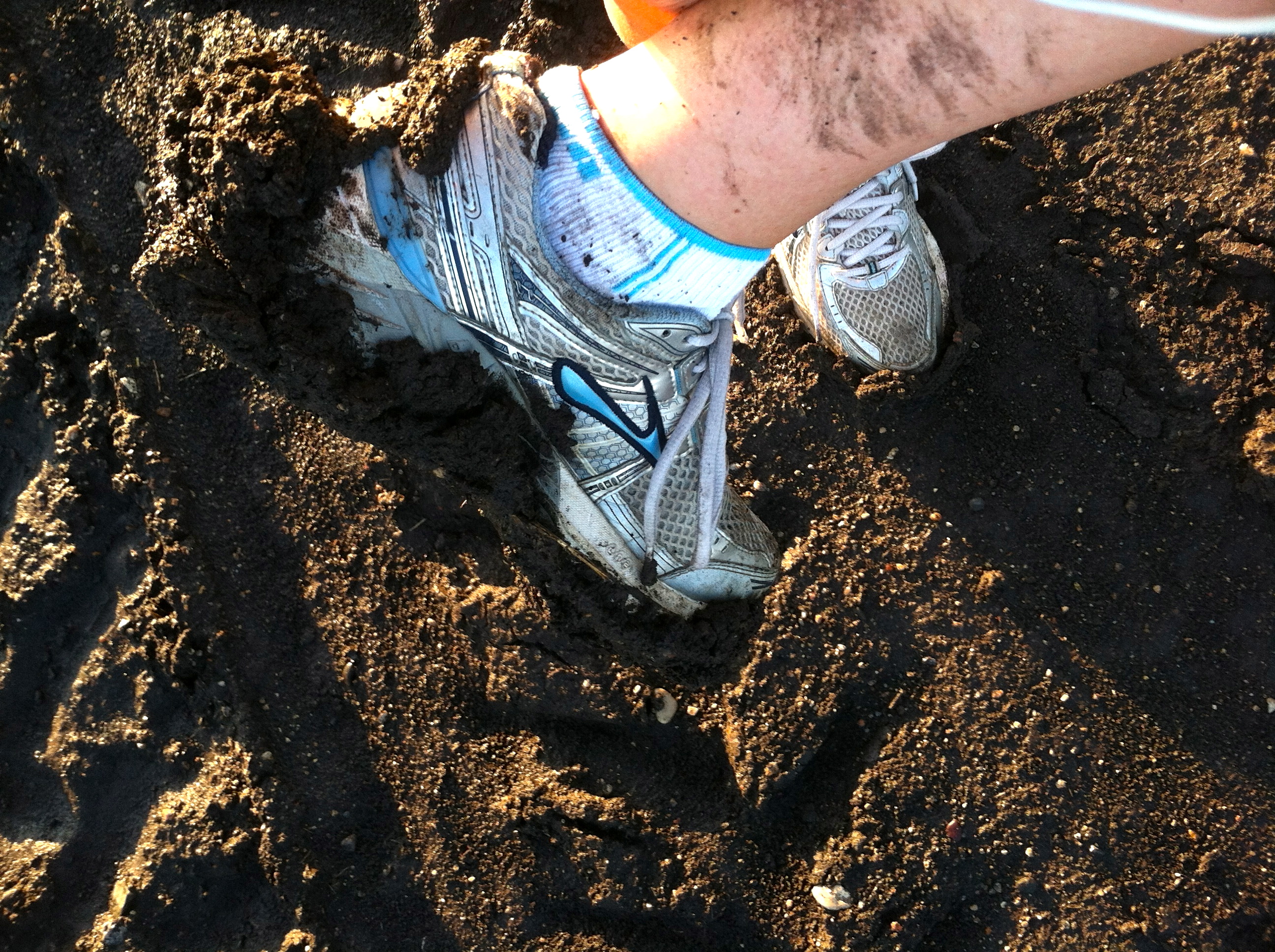 When I made the first left, though, the gravel disappeared and my feet sunk into the mud. I tried hopping around puddles to find drier ground but to no avail. Near the end-mile of what they would later tell me was a “tractor road,” I had so much North Dakota stuck to the bottom of my shoes that I could barely lift my feet. I tried shaking my shoes as I ran, tried sliding across an occasional rock to clear the soles, but nothing worked. Eventually, I crept to a halt, understanding that my morning run in this heavy “Red River gumbo,” as my friend Paul called it, was fruitless. Paul’s mother had been born in North Dakota, so he understood.
I turned around and, out of habit, began running back down the other side of the road against invisible oncoming traffic. But the other side of the road was even wetter, and eventually, the only solution was to run in the tracks I had already left, to go back the way I had come.
When I reached the farm, my shoes and legs were covered with mud. The daughter of my birth cousin, our gracious host who now lives on the farm with her husband and children, helped me hose down my shoes, and I dangled them from a wooden fence post to dry.
Later that day, we were on our way back to the farm after visiting the nearby homesteads where my birth mother’s parents grew up, the Lutheran church they had all attended, and the cemetery where many of the family members are buried. My sister and I were following my birth cousin’s car. Suddenly, it came to a stop in front of us. My birth father emerged with his camera and began taking photos.
My own photographer’s curiosity got the best of me, and I climbed out, too, wondering what had captured his eye.
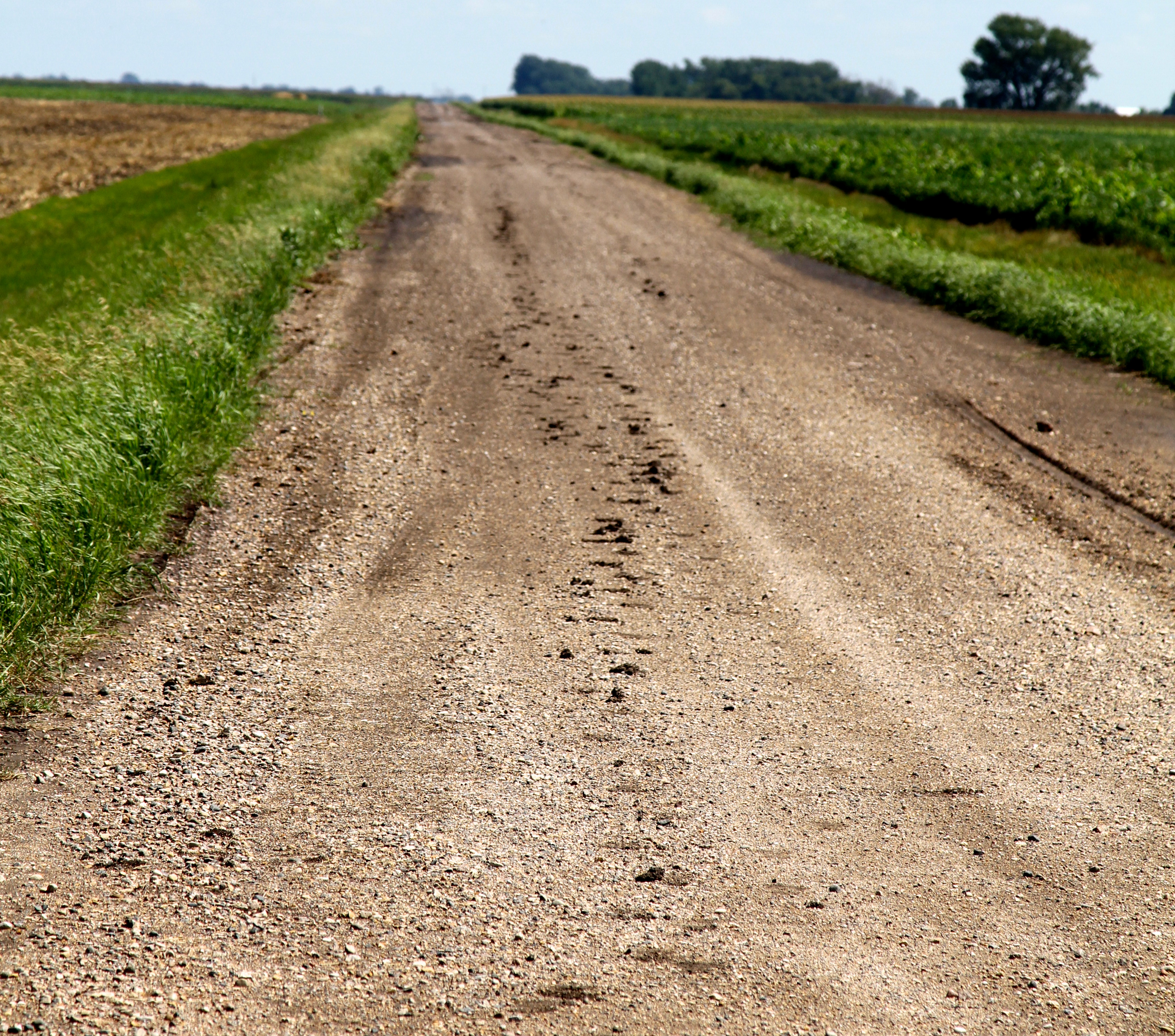
“Look,” he said, pointing down a road. There were my footprints, now carved into the dry mud, heading off as far as the eye could see. He snapped a photo, both of us laughing.
At the dinner table that night, they were still talking about my morning run, about how lucky I was that I didn’t lose my shoes in the sticky soil that lapped greedily at my feet.
“How long do you think my footprints will be there?” I asked.
“They only mow down that stretch a couple of times a year,” my birth cousin’s husband said. “Could be there a few months or so.”
Well, keep me posted, I joked.
Let me know how long it is before I disappear, before North Dakota swallows this trace of me.
North Dakota
 My middle son has been obsessed with North Dakota since he was just over one. I can’t remember how or why he settled himself there, his needle stuck in the groove of this particular record. By the time he was two, we had checked out every book in our public library on The Peace Garden State (all three of them). He could rattle off facts about North Dakota that most North Dakotans likely don’t know: that the state beverage is milk; the state fruit, the chokecherry; the state horse, the Nokota.
When he was three, we picked up a AAA map, and he spent hours at his wooden play table, tracing the cartographer’s lines with his little finger, asking, “What’s this dot called?” Fargo. Velva. Killdeer. Tuttle. He wanted to know how far North Dakota was from Philadelphia. 1,300 miles. How long it would take us to drive there. 24 hours, without stops. When we would go. Some day.
When he was four, I asked, “What will you do when you get there?”
His older brother chimed in, “You know, Mount Rushmore is in South Dakota, not North Dakota.”
“I know!” my son said, then turned to answer my question. “I don’t know. I’ll just look around.”
Now six years old, he’s no more sure of what North Dakota holds for him, but he’s determined to get there.
That year he turned three, I had located my birth family and learned that my birth mother is from North Dakota. The non-identifying information my parents had received from Lutheran Child and Family Services indicated that she had grown up on a dairy farm, though it didn’t say where. My sister and I just assumed the farm was in Wisconsin, given that, according to the agency notes, she had attended college in the Chicago area and given birth to us there. It never occurred to us to look farther north, farther west, to conjure a smart, spunky farm girl who had traveled so far to make a life for herself. It took me a while to adjust to the truth, having fashioned another narrative for so many years. North Dakota, not Wisconsin.
After being discharged from the hospital, our birth mother returned home to her family farm in North Dakota. She said she doesn’t remember getting there, doesn’t remember how she left the hospital, how she made it to the train station, how the train carried her home. Nobody in North Dakota knew what she had endured. All those memories have gone dark, lost to the incredible pain of the journey.
In two days, my sister and I will start off from Illinois Masonic Medical Center, the hospital where we were born, and make the journey to North Dakota, back to where my birth mother grew up and where she returned after giving birth to my sister and me. One of her nieces still resides on the farm, in the house, where my birth mother and her four siblings were raised.
Originally, my sister and I had planned to take the train, the same one that would have carried our birth mother home, but the train would have dropped us an hour north in Fargo in the wee hours of the morning. A one-way ticket was over $100. With my sister’s six-month-old, and my son, in tow, that idea eventually soured. We’re driving instead and overnighting in Minneapolis, where we will meet some of my birth mother’s extended family for the first time.
When we arrive at the farm in North Dakota on Saturday, there to greet us will be our birth mother, traveling back home for the first time in nine years. Our birth father will be there, too. I am so grateful to her for making this journey. It was my idea. It was my compulsion to go there, to breathe the air she breathed in the days after leaving us, to watch the sun set over the prairie, as surely it set four decades ago. I struggle each day with a desire that feels selfish, that burdens others with expense and pain. I remind myself of the mantra I imposed on my role in this journey from the very beginning: Do no harm. I’ve realized that such a mantra is impossible. Now, revised: Do as little harm as possible while being true to yourself.
Earlier this year, in the midst of difficult discussions with my birth family about the proposed trip, I tried to explain to my birth mother why I wanted to go. Maybe, I wrote in an e-mail, I’m trying to reach you in the past because I am having trouble reaching you in the present. Maybe I’m trying to reach back in order to get myself going again, in order not to be smothered by this process, this pain, this inability for us all to be kind and good and, in whatever sense it may be, family to one another. I truly don’t know.
 I’m taking my son with me because he’d never forgive me for going to North Dakota without him, but I am happy to have him along. I’m just as grateful to my sister for making the trip with her new baby, for it didn’t seem right to go without her. Whenever I travel back into a past that marks who I was, or might have been, my family serves as a tether to who I am, grounding me in security and love.
Every day for the last month, my son has awakened with a question. “Are we going to North Dakota today?”
In just a few days I will say, “Yes.” Yes, today, we all begin the journey back.
Mourning Doves
 We spent the last week trying to save a baby dove that fell two stories from a nest in our gutter to the concrete slab in front of our door. It sat there for two days before the postal carrier alerted us to it. Because we never use our front door, the storyline might have worked itself out without our knowledge–except that once the carrier told us about the bird, we became responsible for it–and thus moved to do something to save it, if we could.
My husband and I spent an evening searching wildlife refuge web sites and making phone calls to rehabilitators in our area who specialize in birds. Studying photos we found online, we attempted to identify the stage of the baby dove, or squab, and determine its condition. It appeared to be a fledging and seemed healthy enough; it just couldn’t fly. In fact, maybe it hadn’t fallen at all. Maybe it had gone for its first flight and not been ready to go any further. I called White Flicker, a wild bird rehabilitation clinic in Ambler, Pa., only to learn from a voicemail message that they were not accepting any new birds for another few days.
Eventually we heard back from one of my husband’s colleagues, who is a birder. She wanted to know if one of the baby’s parents was around. In fact, we had seen an adult dove near the baby, sometimes sitting on top of it to keep it warm, sometimes hovering nearby on one of the steps. Good, she said. Build a soft little nest. Put the squab in the nest. Then leave it alone and let the parent take over. As long as the parent does not abandon it, in a few days, maybe a week, it should be ready to fly.
My husband lined a Wheat Thins box with a scrap of his old pajama bottoms and took our six-year-old , the family animal lover, out to the front porch to take care of business. The parent bird–we were referring to it as “The Mother” by then even though it easily could have been The Father–took one look at my son and dive-bombed his head. My husband took advantage of the distraction and gently placed the squab in the cracker box nest while The Mother flapped an angry ruckus. 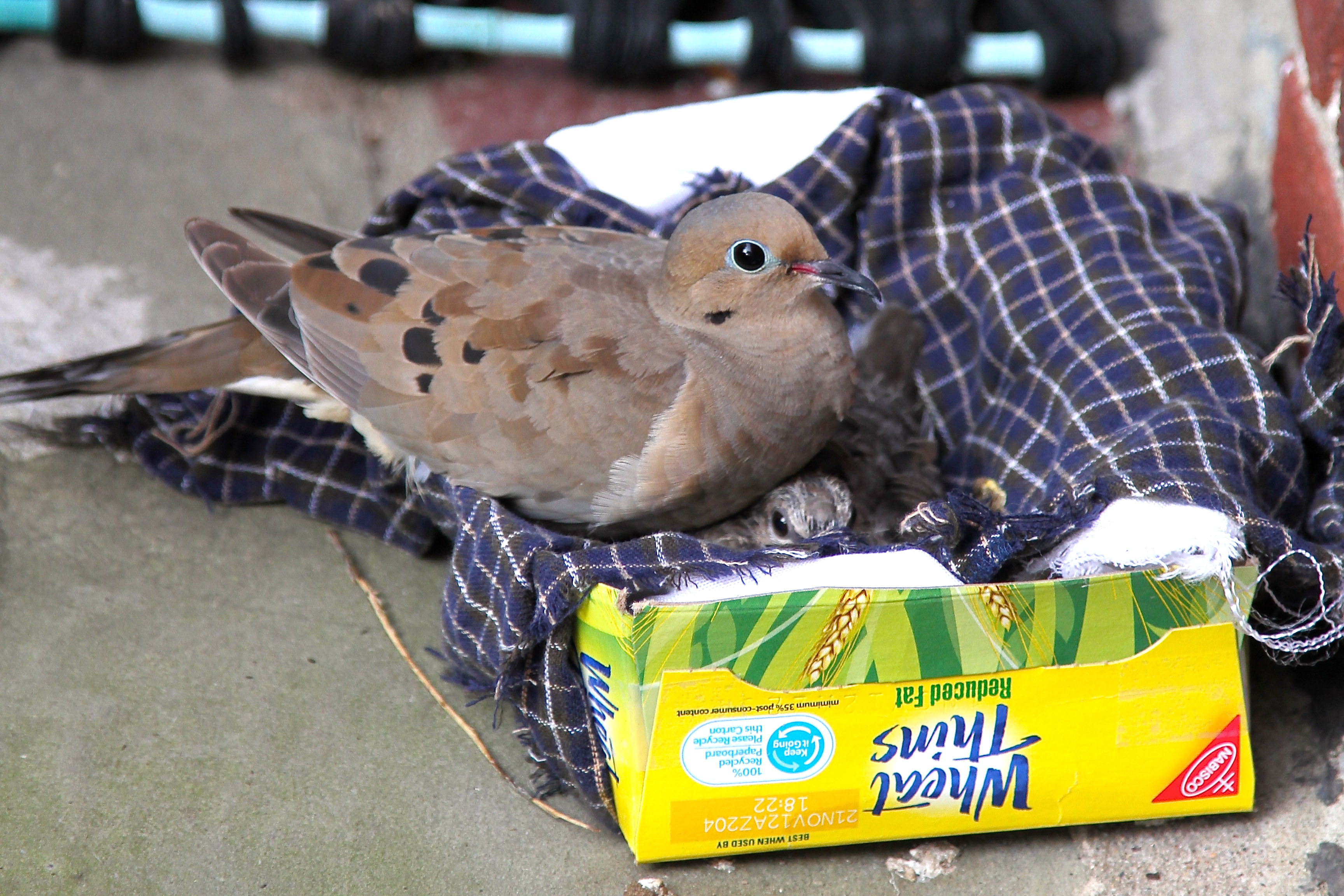
Doves, we were told by another expert, are notorious for building flimsy nests in less than ideal locations. It’s not uncommon for their nests to break apart or for their eggs, and babies, to tumble out. But despite such obstacles, or maybe because of them, mourning doves are also fiercely protective of their children. It’s just the way they are wired.
For three days, we watched warily as thunderstorms rolled in and out and the heat index reached 105. The Mother was often there, sitting on her baby or perched nearby on a step. Whenever she flew away, we wondered if she would come back, and she always did.
Two nights ago, I went to check on them, and they were gone.
In an impressionable biology seminar that I took in college, we examined anthropomorphism and our tendency to ascribe what we think are strictly human characteristics to animals and plants. Our professor sided with the critics who dismissed anthropomorphism as sentimentalism, as a barrier to scientific objectivity. I get that. But in my own humanistic discipline, anthropomorphism is also a device that helps to corral complexities and parse out wisdom. It’s a means to understanding.
This past week, watching an animal refuse to abandon its young on my front step, I found it difficult not to think that I had been handed some kind of metaphor, on my birthday no less. There was a lesson in this tale, not just about the instinct of a parent but about the way I have framed, sentimentally, subjectively, my own adoption story in an attempt to make sense of it, in an attempt to live with it.
I mean, I was absolutely riveted by The Mother bird, the way she stood guard over her baby, nursing it with crop milk in her beak, sitting atop it to keep it warm, refusing to leave it behind. It’s just a bird, I kept telling myself. But my God, a bird!
I look again at the photos I took of The Mother sitting on her fuzzy squab and try to force myself to see a more objective narrative. But this isn’t science. No matter how hard I try, I simply see The Mother Who Won’t Let Go. She lies in wait, fending off predators, warning us all to keep our distance, until the time comes for both of them to fly.
The Orphanage

There are ones you never forget. Mine is the little girl in the green room with the curtains drawn against the sun, which presses against them in bright vertical rectangles. Those blocks of light are veiled evidence of a world outside this room. Inside are two rows of green and pink cribs, five on each side of the room, with an aisle down the middle. She is on her back in a pile of blankets in a pink one at the end of a row.
Some days there were toddlers in the other cribs, attempting to nap, or refusing, depending on their toddler moods. Other days, they were in a playpen in another room, climbing over and on each other like puppies. “Hey,” my sister whispered to a group of them one day. They were in a huddle on a little boy’s back as he sprawled face-down on the floor of the playpen. He was crying. “Don’t stand on him. That’s not nice.” The huddle stopped jumping and looked at her, blinking. “La la la,” she tried again. Blink. Blink. Jump.
Back in the green room, the little girl was staring at the ceiling. Something was wrong with her—she didn’t seem able to move—she was too old for a crib—her limbs were sticks–her eyes was wild and lost—but I never ventured through the doorway for fear of upsetting the nurses shuffling past. Instead, I stood on the threshold, trying to catch her eye. I’m not sure why I wanted her to see me standing there with my forced smile. I wasn’t staying. I wasn’t taking her home. At the end of the week, I would be on a plane to Paris, then to Philadelphia, and she would go on lying there in her crib until she wasn’t lying there anymore. Sometimes she whimpered and grunted. Sometimes she cried with her mouth wide open, only no sound escaping. That is how she comes to me in the quiet spaces before I fall asleep: a little girl buried in blankets in a stuffy room, her mouth a circle of soundless sobs, as I instinctively shush her from the doorway, the way I do when my own children cry.
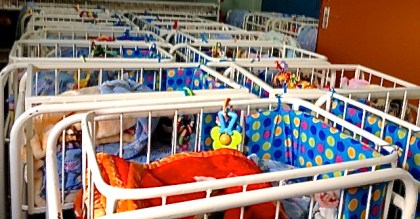
One day everyone at the orphanage seemed cranky. It was over 100 outside—a boiling spring day, even for Morocco—but the babies were still dressed in their requisite three layers. Maybe they were hot or their afternoon bottles were late or they hadn’t slept well or it was just one of those days, but the entire orphanage reverberated with MAMAMAMAMAMAMAMA. It would have been easy to hear something that wasn’t there–a long, deep cry for the bodies that had left them somewhere else–but I was trying hard not to form metaphors from my own narrative of emotion. That’s not easy to do in an orphanage, for anyone, but especially when you are adopted.
As a child, orphanages haunted me. They were one of the boogeymen of my nightmares. My sister and I were in foster care briefly between mothers, but the possibility of the orphanage still hung in the air of my childhood like a barely missed threat. The only still operating orphanage I knew of was in nearby Assumption, Illinois, a small rural community along I-51 that we passed through heading somewhere south. As we drove by Kemmerer Village, I gave in to my imagination, populating the insides of buildings I couldn’t see with sad, parentless Oliver Twists and Orphan Annies and Pips and Pollyannas. As an adopted kid, I didn’t take family for granted. Family wasn’t an inevitability, an expectation. It was a gift.
In reality, by the 1970s, orphanages in the United States that remained open were not filled with healthy, white newborns-in-demand like my sister and me. They had become places of shelter for older troubled and abused kids. Orphanages were for the unlucky children, the ones who were not chosen, who were cast off or taken. It seemed entirely unfair that some of us got families and some of us didn’t, and the orphanage symbolized for me the fragility of my own good fortune.
On the other side of the world, in the orphanage where my nephew spent the first four months of his life, he had a First Mama, a nurse who was his primary caregiver, a nurse he might have called MAMAMAMA some day in the future when he was hot or hungry or bored. But another mama chose him before he could speak. Whenever my nephew’s First Mama brought him to my sister during visiting hours at the orphanage, my sister took him in her arms and said, “Hi, baby! It’s Mama.” He smiled as soon as he heard my sister’s voice.
One afternoon, while my sister bounced her baby in her arms before settling onto the mattress to give him his bottle, I slipped out into the hallway and looked in on the little girl next door. She was lying in her crib with her eyes on the ceiling. Her mouth kept opening and closing in silence, like a guppy trying to breathe out of water. I wondered if she was here because she was broken or if that would have made no difference anyway. Whatever the case, I knew that she would likely not be adopted, not if she were this old already, not this disabled. The odds of one of those amazing and brave parents who adopt children with special needs finding their way to this girl, in this orphanage, in this country, were slim.
I realized that I was standing in the doorway to one of my greatest childhood fears, facing the bullet my sister and I had dodged. I watched it strike this little girl instead, bypassing my sister and me, bypassing my nephew, too. We all got a family. She probably would not.
Yes, here in the flesh, was the orphan destiny I so feared. She wasn’t in a book or in a movie or in a brick building flying by my window in a red blur . She was right here, just feet from me: a child who would never be chosen, a child whom I, too, was about to turn away from.
Signatures

The letter my birth mother received from a court-appointed confidential intermediary on the last day of January in 2009 looked like junk mail. The return address was typed, and the label with her name and address was askew, as if slapped on by a machine. She said she nearly threw the envelope away but decided–she doesn’t know why–to open it anyway. She stood at her kitchen counter for a long time before placing the letter in her pocket. She read it four times that day. Then she went to tell her husband, my birth father, that I had found them.
A copy of my original birth certificate arrived on the last day of June, three years later. It got stuck in the mail slot in our front door, and my husband unwedged it and set it aside on our dining room table. Crumpled and damp from a middle-of-the-night thunderstorm, it looked like a throwaway, too, except that I was expecting it. The surprise was that it arrived when it did. The Division of Vital Records in Springfield, Ill., received thousands of requests for original birth certificates when a new law began allowing adoptees to request copies of their original birth certificates beginning Nov. 15, 2011. I didn’t send my request in until mid-January 2012 and had expected to wait a year, maybe two, based on assessments in various newspaper articles and adoption forums. I waited less than six months. I waited almost six months.
Earlier this spring, at the American Adoption Congress in Denver, I attended a screening of footage from filmmaker Jean Strauss‘ documentary-in-progress, Opening Day, about Illinois adoptees who applied for their original birth certificates under the new law. (Strauss’ short documentary, Vital Records, which you can view here, is about the ongoing debate over adult adoptee access to original birth certificates.) One of the adoptees featured in Opening Day throws herself a party to celebrate the receipt of her birth certificate. She opens her envelope in front of a reception hall filled with family and friends. Another person films herself opening the letter, weeping when she reads aloud her original name, and her original mother’s, for the first time.
I opened my letter after church, sitting at the dining room table, with my children buzzing around me. Three years into reunion, there were no surprises, no held breaths, not even a ceremonial moment of quiet to myself. I didn’t feel any more or less myself for holding this piece of paper in hand, but I felt enormously grateful for the tireless efforts of adoption rights advocates, people like Illinois State Representative Sara Feigenholtz, who sponsored the open records bill that finally passed in Illinois. If it weren’t for them, I would not have this beginning of who I am. Even if it doesn’t make a huge difference in my own story at this point, it makes a difference in the story of adoption. It matters.
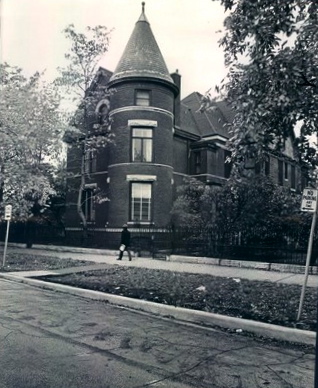
Florence Crittenton Anchorage, Chicago, 1972
My original birth certificate revealed what I already learned when I met my birth family a few years ago. I tried to imagine what this journey would have been like had it started here, as it has for so many other Illinois adoptees, watching their history take shape for the first time on a clean piece of white paper that still managed to smell musty. But the truth is, I can’t undo what I know. So, in the end, I get confirmation. She is our birth mother. She is from North Dakota. She gave birth to us at Illinois Masonic Medical Center. She was 23. The street address for both her current residence and her mailing address at the time of our birth is the now shuttered Florence Crittenton Anchorage on Washington Boulevard in Chicago.
Here, too, my birth father remains the shadow he was for so much of my life. The only information about him is his age–listed as 26. He was actually 27 when my sister and I were born.
It’s the signatures that give me pause, the tall, hurried scrawl of the attending doctor, the one my birth mother remembers trying to buy us for $1,500. He’s more real here in a signature than in the typed name on my amended birth certificate. And here’s my birth mother’s signature, too–the “Informant’s Signature.” Her name, in her own hand, is the first I have–is all I have–of who she was when she was still our mother. It says so on the birth certificate. Informant’s Relation to Child: Mother. Not birth mother. Not natural mother. Not first mother. Just mother.
Mother signs her name in a tidy, teacher’s script, though she was not yet a teacher. She must have written her name and gone back–or was directed?–to include her middle initial, an “L,” the same as mine. A tiny caret, a proofreader’s mark, points the reader to the first letter of her middle name.
Several weeks ago, my husband and I refinanced our home to take advantage of lower interest rates. While signing papers, I forgot to include my own middle initial on one of the documents. I drew the same caret, inserting an identical “L” in the white cloud between my first and last names.
In this signature moment of my birth, there is only this one slip, pointing to what is about to unfold. Oh, yes, everything is coming together nicely now, the t’s crossed, the i’s dotted, all there, right before it falls apart.
For nearly four decades, nobody will notice.
Wishes
 My great uncle Paul was one of my favorite people when I was a kid. He was an intellectual, and a talker, and I could listen to him tell stories for hours at our dining room table. He adored his wife, my grandmother’s younger sister Lorena, whom he called “Fritzie.” They were two of the sweetest people I knew, always smiling, always tender. The night before Aunt Lorena died in 2008, I dreamed she was knocking on a tall wooden door to the German Lutheran church I attended as a child. Eventually the door opened, and my grandmother and father, both dead, let her in. That was the last I saw of Aunt Lorena.
The tragedy that marked their lives made me timid around them, though, as if getting too close to them might disturb the dust of their sadness, which they kept settled from view. Their only two children both died before I was born. Jim, who was studying to be a doctor, died when he was a senior at Valparaiso University. It took years before family whispers about Jim became recognizable words to me: He had committed suicide. Their daughter Susie, born with severe spastic cerebral palsy, died a year after Jim, just months after my aunt and uncle made the wrenching decision to move her out of their home and into a nursing facility downstate in Anna.
Jim and Susie’s deaths, and that of my mom’s little brother Ronnie, who died after contracting both mumps and measles when he was almost four, hovered over my childhood, casting shadows. I learned from these shadows what it means to persevere in the face of unimaginable sadness, but I also learned that such sadness never goes away. Long before I had children of my own, I understood the deep, vulnerable love for a child, how the loss of that child never leaves you, no matter how many other children, and grandchildren, you may have, no matter how many joyful years you manage to tuck behind you as you plod forward, living.
Shortly after Aunt Lorena died, I contacted a childhood friend who is a writing professor at Valpo and asked for her help in finding out what happened to Jim. At the time of his death, nobody understood why he had taken his life, and I’m not sure what I thought I would find that would make it any easier to comprehend. Allison put me in touch with an archivist at the Valpo library, and the two of them graciously passed along yearbook photos and newspaper articles about Jim’s death. At Valpo, Jim was an honors student, lettered in varsity golf, worked on the student newspaper, was a residence hall counselor, and a member of the honor guard and Pi Kappa Alpha fraternity.
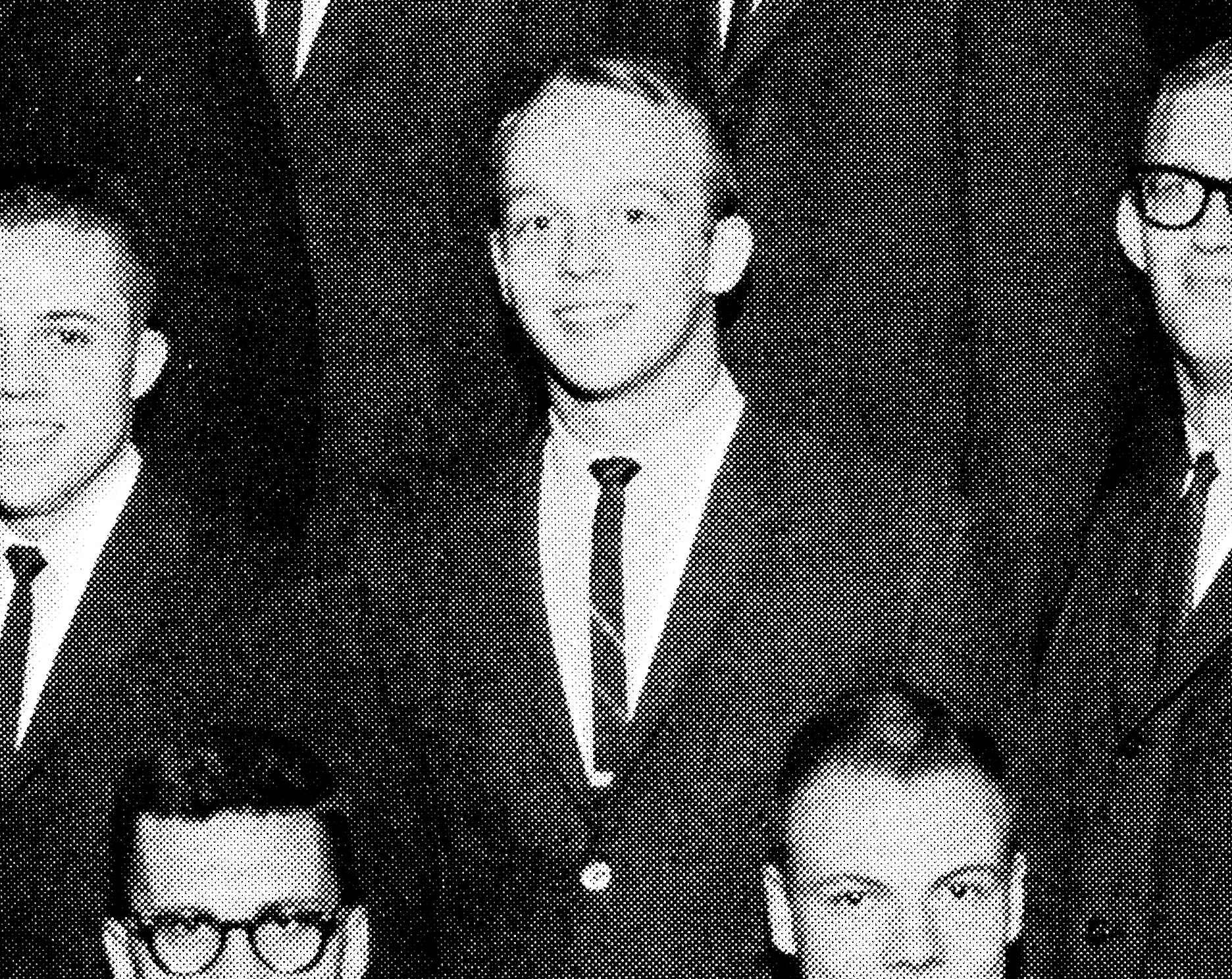 These pictures of promise from Jim’s college yearbooks are the first I remember seeing of him. I was astounded at how familiar he looked, and how alive. Charlie Jones, one of Jim’s best friends from high school in Quincy, Illinois, later told me how much everyone loved Jim: “He was good-looking, well-mannered, had a great personality, and I never knew or heard of anybody who didn’t like him.” Charlie last saw Jim at a Frank Sinatra movie over Christmas Break in 1965, when Jim was home from Valpo and Charlie was home from medical school. “He sure seemed like the old Jim the night we saw the movie,” he told me.
On January 4, 1966, back at school, Jim took an overdose of sleeping pills. He left a note in his pajama pocket, saying he was depressed and thought he had cancer. He wrote that he worried about the impact of such a diagnosis on his beloved parents, who already had their hands full with his disabled sister. He awoke some time the next day, added to his note, and likely took more pills. His housemates discovered him that afternoon, and he was rushed to the hospital where he died the following morning without regaining consciousness. He was 22. The final semester on his college transcript shows a list of W’s, wishes left unfilled. The autopsy showed he had no cancer.
At Uncle Paul’s funeral yesterday in Quincy, there were no children or grandchildren to serve as pall bearers although certainly the small gathering of people at his funeral loved him dearly, just as I did. He died a week after his 96th birthday. When he was laid to rest at Quincy Memorial Park, next to his wife and two children, I want to believe–no, I do believe–that one of those leftover wishes finally came true for all of them.

Freedom
My three-year-old is obsessed with the Statue of Liberty. In tender moments, he refers to her affectionately as “Lady Liberty.” Well before he was three, he knew that she was the handiwork of sculptor Frédéric Bartholdi, whose wooly beard and long, droopy bow tie he can easily pick out of a photo line-up. When you ask him where Bartholdi sculpted the Lady, he says, “Pa-ree,” mimicking the way my husband pronounced it in French one day.
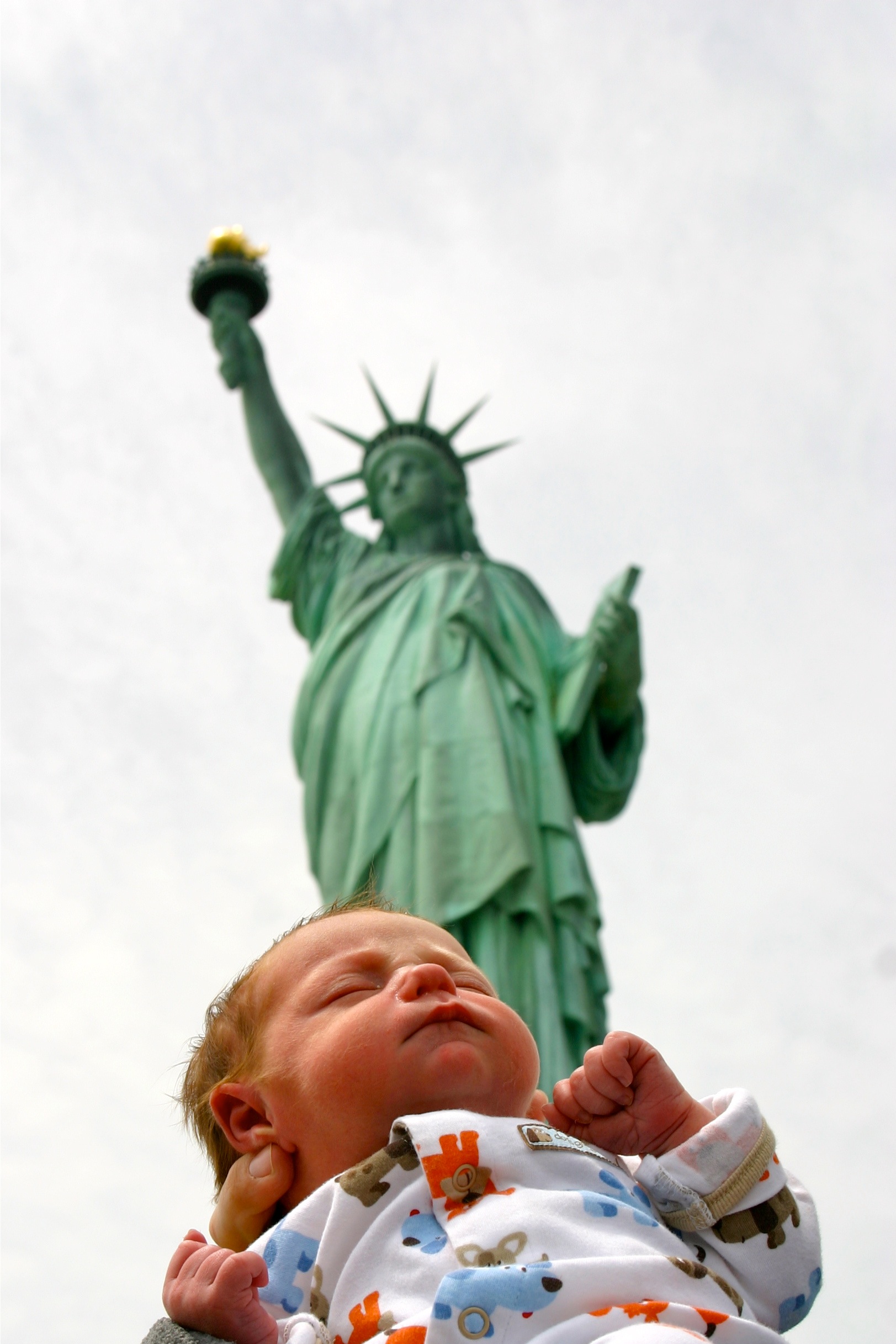 When my youngest son was just over two weeks old, we took him and his two brothers to the Statue of Liberty. He was barely old enough to keep his eyes open at that point, but he must have seen something that stuck with him. When he asked for a Statue of Liberty cake for his birthday this year, we decided to do one better (though I made the cake, too) and take him there again.
This past weekend, my mom, sister, nephew and brother-in-law joined us for my son’s birthday excursion to Liberty Island. We boarded a ferry at Liberty State Park in New Jersey and made our way to Ellis Island, the first stop before Liberty Island. I’ve been to Ellis Island a handful of times since it opened as a museum in 1990, and each time, the story of immigration, and America, as it unfolded in this place, fills me with emotion. For me, too, Ellis Island stands as a metaphor for adoption, with the old life on one side and the new life on the other. A bureaucratic bridge, housed in a stately red brick building, serves as a transport between these lives. Medical inspections. Legal inspections. Social politics. Laws. When I stand in the Registry Room, otherwise known as the Great Hall, I can hear the chaotic din of those temporarily caught here, echoing off the walls and the vaulted ceilings. Their ghosts sweep past me, hopes and fears and sorrows swirling by. Their limbo is my own held breath.
The first time I visited Ellis Island in the late 1990s, my sister and I searched the passenger records and ships’ manifests for our mother’s grandparents, who passed through Ellis Island on their way from Württemberg, Germany, to Decatur, Illinois. It felt like watching a birth when their names appeared. Albert Heinkel. Age 25. Merchant. Marie Seyfang. Age 19. Nearly ten years later, when I discovered my birth mother’s photo on her high school website, I felt again the excitement of watching a stranger who belonged to me take shape on a computer screen.
“Here’s Great-Grandpa Heinkel,” I said to my mother the first time we were at Ellis Island together, standing at the computer terminals where you can search for family members.
She didn’t say, “Not your great-grandpa Heinkel.”
She said, “Where? Let me see!”

Registry Room, Ellis Island
On Ellis Island, I am not an official definition of ancestor, but I am something just as real. From this starting place, I follow the Heinkels down the right side of the staircase at the top end of the Great Hall, heading west to Illinois.
Three years into a reunion with my biological family, I can’t settle the role of biology in my life. Two new ancestral lines, one belonging to my biological mother, one to my biological father, take shape before me, heading in directions different from what I’ve always known and creating a tangle of contradictions. There is my biological other, my sister (biology matters). There is my adoptive family, with whom I share no genes (biology doesn’t matter). There is my biological family, with whom I share genes (biology matters). There is my new nephew, adopted from Morocco (biology doesn’t matter). Recently my biological father told me that he hopes my sister and I will stay connected to his son, our biological brother. ”You three will pass on the bloodlines of my family,” he said. My biological father, who is also an adoptive father to three other children, is not insensitive to these matters. He’s navigated them from more sides than most fathers and grandfathers. He, too, believes that family is family, no matter what. But I’m having trouble reconciling my own notion of family with my place in his bloodline. My children share a genetic relationship with my biological family; my sister’s son, for example, does not. If an ancestral line only includes those who share genes, it becomes, for me, a line of exclusion, not inclusion. It becomes something opposite of my understanding of family as I have lived it.
I’m more than just casually interested in the people and the places that belong to my birth history; they do matter to me. But the truth is, I’ve never felt a longing for a biological origin. I have always been content with the one that was shared with me and that I made my own. It’s not genes that draw me in as much as stories. I’m far more attached to narrative lines than ancestral ones. Who are you? Where did you come from? Tell me about your journey. Let me find my place in your story. Find your place in mine.
At the Statue of Liberty, there’s none of the heaviness of Ellis Island. Here it is all about freedom and friendship and refuge. With the statue in front and New York Harbor behind, I directed my clan together for a picture last weekend. My little nephew anchors one end of the photo; my mother anchors the other. In the middle are my sister, my husband, his brother, my three children. A motley huddle of genes. They are laughing and pouting and looking here and there with eyes closed and open as the harbor breeze whips brown hair this way and blonde hair that way. In the shadow of Lady Liberty, our breaths exhale in the wind.

Giving Back
From the time we were old enough to conceptualize a future, my sister and I discussed adopting a child ourselves one day. We referred to it as “giving back to the system.” We weren’t sure which of us would do it, and really, it didn’t matter, as long as one of us did. That’s how we saw it. One of us would give back to the system for both of us. It’s interesting to me that, even as children, we thought of adoption as a system. The word seems so clinical, so unlike, say, birth. But it was a system; it was a complex set of individual components, of laws and social philosophies and personal choices, that launched my sister and me on the journey that became our whole, that became our life. And because that life was good, it was easy to see the system as good, too, as something worth honoring by some day participating in it again, only from another side.
I understand now that the system of adoption, in 1970, had flaws. But because we knew nothing of those flaws as children, nor any story other than our own, because we grew up strong and happy and loved, we saw adoption only for its over-riding good. We were grateful not only for our family, but for the system that made that family possible.
My sister’s journey to adopt her son coincided with my own awakening as a person who was adopted. (Once, after attending a parenting class for adoptive parents, my sister advised me to stop referring to myself as an adopted person. “You are someone who was once adopted,” she told me. “You do not have to carry the label, the action, forward as an essential definition of yourself.”) At the very moment that I was coming to terms with the anguish not only of my own birth mother letting go but of so many others, my sister’s arms were outstretched, waiting to receive her son. While my sister was making final preparations for her son, I was reading stacks of books and memoirs about adoptions and reunions that worked, and didn’t. I began publicly writing my own story, stepping delicately into my own life, an act that required so much sensitivity to avoid wounding. I had to consider every side, not just my own. Here’s what that meant. In the midst of one of the most exciting, hopeful times in my sister’s life, I was being a killjoy.
The minute my nephew began making his way toward my sister, he was moving away from the woman who brought him into the world. I couldn’t stop thinking about the pain that I perceived his birth mother felt when she left him behind at the maternity hospital in Morocco. I couldn’t stop thinking of her journey home with her full breasts and empty belly. As a child, I never thought about my own birth mother as deeply as I thought about my nephew’s, and in my new-found wisdom, I felt obligated not to blink away the components of the system of adoption that, for all its good, are uncomfortable, and sad. I thought that my sister could handle it, that she, of all people, an adoptive mother who also was adopted, could bear the responsibility of the entire story. And she could, and she did, but it was a burden, too.
“You’re starting to make me feel guilty about being happy,” she confessed one day.
And then I felt guilty about feeling sad for the mother I didn’t know, at the expense of the one I did.
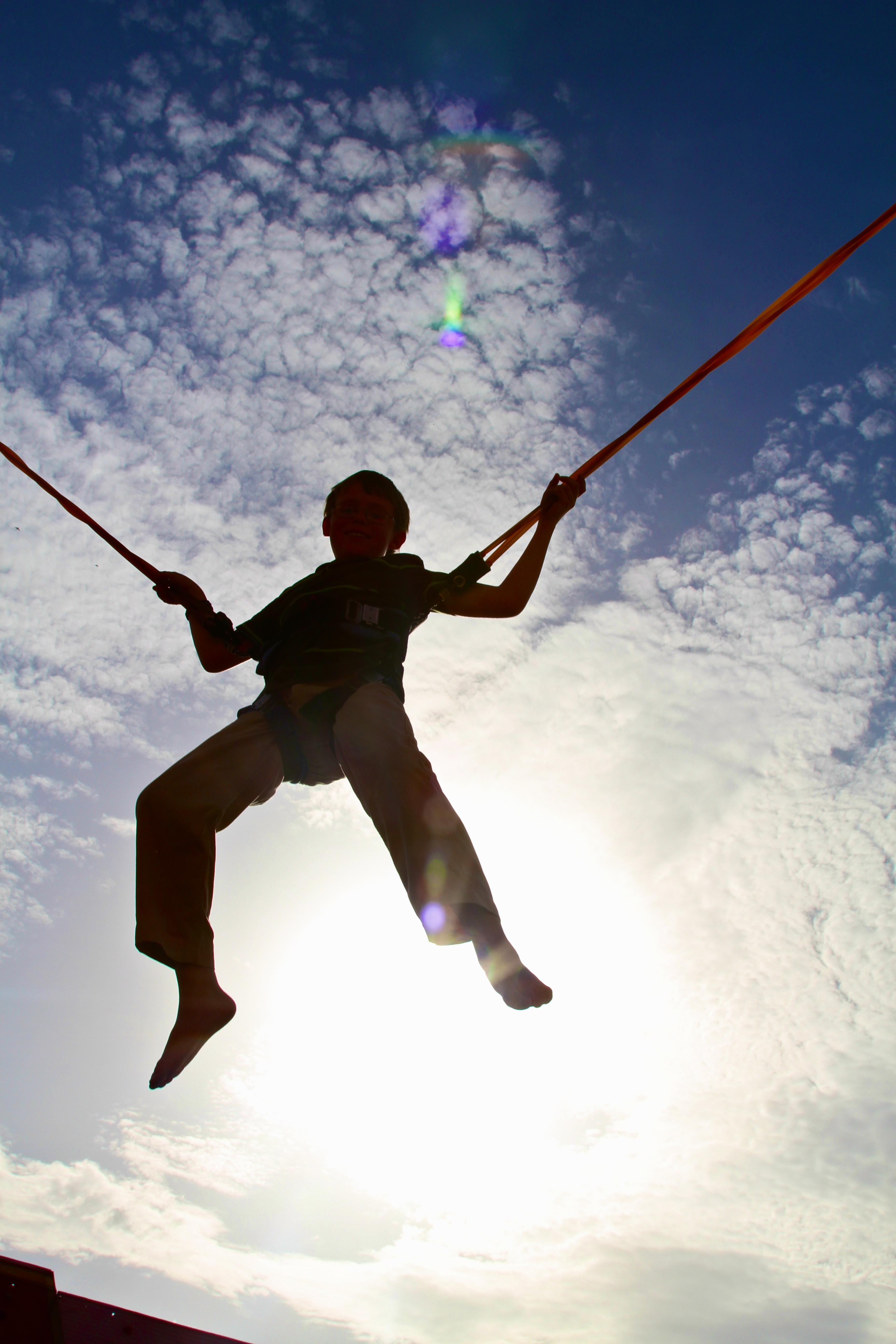
One day last month, after visiting the baby in the orphanage in Morocco, we passed a small carnival set up in an open square in the city where my nephew was born and where his birth mother may or may not reside. We were all exhausted from the twice-daily hike in 100-degree heat across town and up the hill to the hospital that housed the orphanage. Even the carnival looked like it was baking in the sun as we shielded our eyes from the white light bouncing off the metal rides. My son’s eyes lingered over the bungee-jumping apparatus on the edge of the square. I understood his longing. After spending hours in the orphanage each day, soaking up sights and sounds that must have aged his soul by decades, he wanted to be nine again. “Go ahead,” we told him, placing a handful of dirhams in his sweaty palm.
The carnival worker hooked him up to a harness, speaking to him in Arabic, and motioned him upward. My son just stood there.
“Jump,” I instructed. “Start bouncing.”
He took a few ginger bounces and began springing into the air.
Soon, he was leaping into the sky.
“He looks afraid,” I told my sister.
“He looks happy,” my sister said.
He was both.
And so we stood there as a beautiful but complicated metaphor danced in front of us, in and out of our vision, blinded by the sun.
 Love is simple, but the system of adoption is not. Adoption gives and adoption takes. Adoption stands for unbounded joy, and for deep, wounding sadness. There is my nephew. There is my sister, his mother. There is the woman whose body held him first. It’s dizzying at times, to keep them all in view.
Perhaps my nephew will understand this when he is older, navigating the love he feels for his mother, my twin, and the desires, which he may or may not have, to know another part of himself.
Nobody can write his story for him.
In the mean time, my son wanted off, but the carnival worker could not comprehend my sister’s Arabic or my French. We abandoned language and began using our hands, playing a game of desperate charades, miming STOP. PLEASE. ENOUGH. Finally, the worker understood and lowered my son into view, unbuckling him from the harness.
He stumbled toward us like a drunk, his face red and glistening with sweat.
Back on the ground, we took the whole of him in our arms and steadied him.
“How was it?” my sister asked.
“Good,” he said simply. “Thanks.”
Then he turned to lead us home.
 Twin Prints: An Adoption Story