Communion

Growing up in the 70s, before the women’s health movement caught hold and breastfeeding made a comeback, I knew very few women who nursed their children. As adopted infants, my sister and I were bottle fed, and my mother eventually called it quits, with no regrets, after a concerted effort to nurse our little brother, born when my sister and I were just 22 months old. In fact, I remember only once during my younger years witnessing a woman breastfeed her baby. One day, while playing at the home of a childhood friend, I came upon Mrs. Smith, nursing her infant son at the kitchen table. My friend later explained to me what her mom was doing in the same matter-of-fact way that she had previously told me there was no Santa Claus. I received the news of breastfeeding far better than I did the news about Santa, tucking it away and promising myself that one day, I would do what Mrs. Smith did and feed my baby with my own body.
It took almost three decades before I got the chance. At the time, I was a graduate student working on her dissertation, so I approached the situation as a practical scholar. I researched it from all sides, registered for a Boppy and a nursing stool (neither of which I ever used for nursing), and bought an industrial grade breast pump disguised inside a sleek black backpack. I was committed to success but vowed that my experience as a mother would not be defined by my ability to breastfeed my child for whatever time period I was able to do so (three months? maybe six?)
A few days after I gave birth to my first son, my milk came in, and the pain rivaled childbirth. One of the advantages of being a small-chested woman is that my breasts never got in the way. I savored my ability to slide head-first into second base during high school and college softball games. I never suffered from back aches while running. Until I had my sons, no male, or female, ever drooled over my front. But when my milk came in, my breasts went from being footnotes to stand-alone chapters in my existence. I was miserable. The night my milk arrived, I grabbed two bags of frozen corn from the freezer and took myself to bed to deal with my new reality.
Three months passed. Six months passed. Nursing hurt like hell until my son was nine months old. Everyone I talked to told me if it hurt that bad for so long, I was doing it wrong. Eventually, though, my nipples just went numb, and, right or wrong, my son and I carried along in bliss until he was 22 months old. A graduate school colleague from Tennessee drawled, “If they’re old enough to ask for it, they’re too old to have it.” Like their older brother, my next two sons, who weaned at 25 and 33 months respectively, not only nursed until they were old enough to ask for it but until they were able to do so politely, punctuating their requests with please’s and thank you’s.
When I say it is a point of pride that I managed to nurse three children into toddlerhood without a drop of formula, I don’t mean that as a commentary on anyone else’s choices or abilities. I’m grateful I could. At times it was ridiculously hard to keep going. My friends and I–children of hippies not included–are part of a predominantly bottle-fed generation that likes to joke, “If breast milk makes you smarter, just think what more we could have accomplished.” When it came to feeding my sister and me, my mother had no choice. Neither did my birth mother. And perhaps that’s why it was so important to me to nurse my sons. Perhaps that’s why I persevered. Because I had a choice, and they didn’t. There’s a larger cultural and political debate about breastfeeding taking place in the United States right now, and I’m acutely tuned into it, but my struggle and determination to nurse my sons was a personal one. The minute my breasts swelled with milk, I thought of my birth mother. I thought, “Oh, my God, did this happen to her?” I felt the ache that never found relief. I felt the body that could not hide its secret.
A week ago, just before she arrived in the United States with her new son, my sister asked me if I had any breast milk left in my freezer.
Not for a year or more, I told her. I had planned to turn the last of it into cheese, or soap, just for the fun of it, but our refrigerator died, and my friends and family were spared a round of one-of-a-kind holiday gifts that year.
“Do you think you could get any out?” she asked.
My youngest child just turned three. I weaned him, after an epic struggle, a few months before his birthday. I had no idea what might still be in there, but when your twin asks you for something, you do your best to make it happen.
“I can try,” I offered.
“I only need a drop,” she said.
She wanted the milk for her child, born in a place where milk bonds are on par with biological ones.
The next day I set up shop in a dark corner of the basement where I thought my three-year-old wouldn’t find me.
He caught me bent over a Tupperware container, wringing the life out of his favorite side.
Immediately, he began to cry.
“Good milks!” he sobbed. “I want some.” He paused. “Please.”
I thought of all the therapy he would need if I told him this milk was for another baby, especially after I had been praising him for months for being such a good, strong boy and drinking it all up.
“Just a tiny bit,” I said.
He stuck his tongue into the container and licked. I capped the rest and put it in the freezer for his milk-brother.
There are so many ways to to make a child your own.
This here is one of mine, poured from my whole being, every last drop, now offered to my twin’s son in a common communion cup of family and love.

Love at First Sight
My son grips my sweaty hand as a guard ushers us into the hospital with a flick of his fingers. “Bonjour,” I say, then, for good measure, “Salam.” I don’t want to do anything, say anything, to mess this up for my sister. In a failed attempt to be invisible, my 9-year-old ducks his blonde head, which draws so many stares in this city of dark hair more like my own. He’s nervous and shy and, not having slept for two days, exhausted. We follow my sister down a white concrete hallway, past a row of billing windows and a small café where patients buy food, to a wide gray stairway at the far end of the building. There are no wheelchairs in sight here, no stretchers. Patients, the ones too sick to walk on their own, are draped over their relatives’ backs. An older child in pajamas rides his mother up the stairs in front of us. The mother is breathing hard, sweating from the load and the 90-degree heat, as she drags the two of them up the stairs. There are tiny circles of blood on the steps, but we shuffle around them. The woman and her child turn into a hallway marked pédiatrie, but we keep climbing until we reach the fifth floor at the top of the hospital.
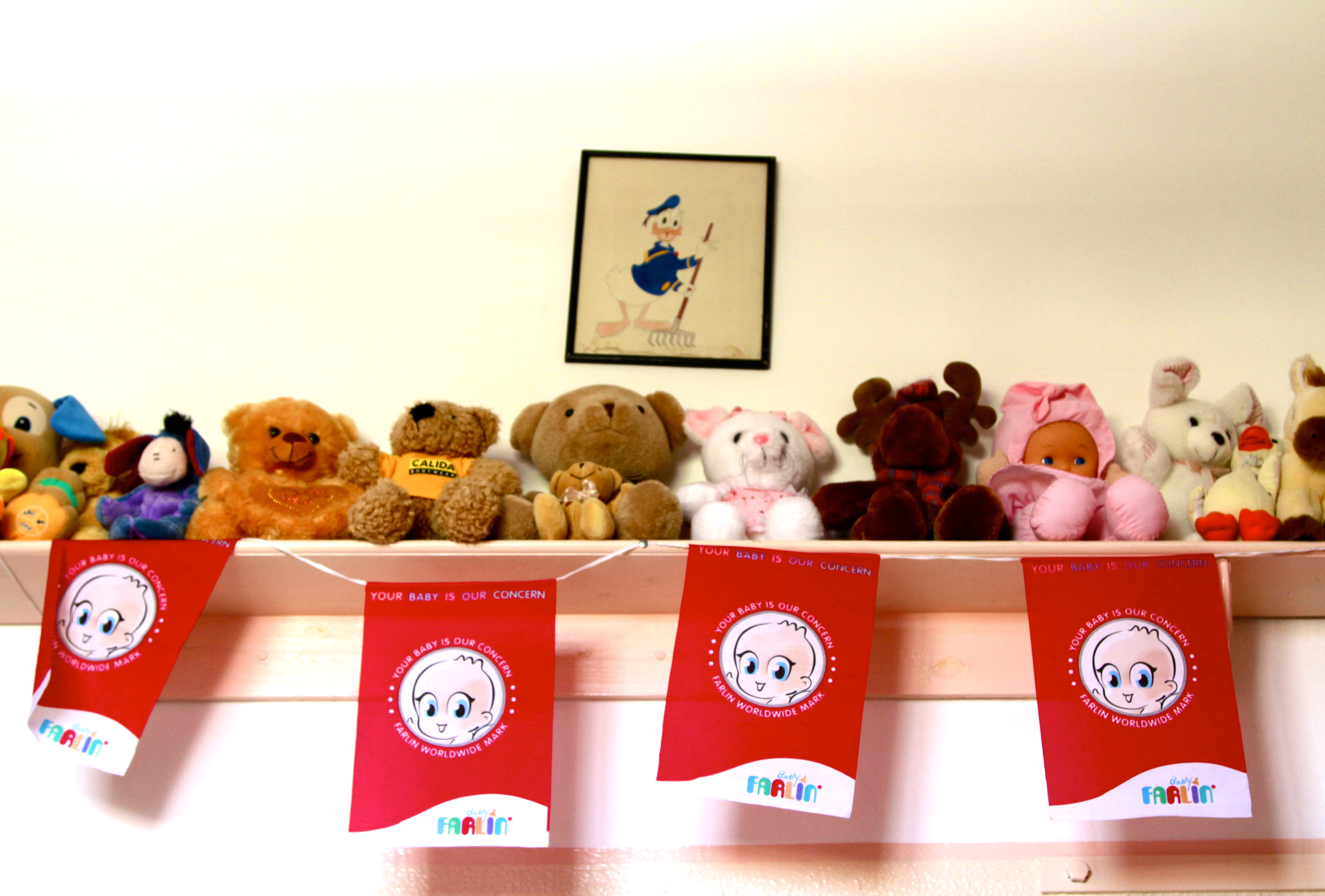
 Straight ahead of us is an intensive care ward for infants where two tiny abandoned twins struggle for life. By the end of the week, one will have died, shrouding my sister and me in a shared sadness that we don’t even need to speak aloud. Another hallway bears right, and my son and I follow my sister to a closed door that marks the entrance to the orphanage. Once inside, my sister is all business, talking to the nurses in Arabic and shepherding us into a pale pink room lined with mattresses on the floor. “Shoes off,” she directs, and we leave our shoes at the doorway before sinking onto one of the mattresses. My son leans against my shoulder; he’s practically sitting on top of me. On two sides of the room are long white shelves, which hold an assortment of stuffed animals and dolls. A few of the toys have tumbled down and are twisted in the blankets on the mattresses. My son fingers the ear of a bear while we wait.
Finally, a nurse, the one who calls herself “First Mama,” the one my sister will tell the baby about when he can no longer remember, carries him in, and we rise to greet her. She hands the baby to my sister, then looks at me. The nurse’s face breaks into a smile, and she begins talking rapidly in French. Even though I can barely make out what she is saying to us, I recognize that bright look in her eyes, the way her eyebrows arch upward, the way she nods in delight. Deux sœurs jumelles. Yes, I nod. Twin sisters.
Once the baby is in her arms, my twin sister buries her nose in his neck and sniffs, the way I buried my nose in my five-year-old just before I left him. “What are you doing?” he asked me. “Smelling you,” I told him, “taking a big breath of you with me.” “Let me do it to you!” he instructed, and then his sticky lips were all over my neck, making me laugh. “Got it,” he said, then let go.
“Hi, baby,” my sister says to the bundle in her arms. “It’s Mama.” The baby looks back with big brown eyes, intently studying her face.
“He knows you!” I exclaim, and he quickly turns his head toward the sound of my voice, the way my infant children always turned to my sister in confused recognition.
Nearly ten years ago, when I became a mother for the first time, I understood more than ever what it must have been like for my birth mother to let my sister and me go. Never before had I considered that relinquishing us might have caused her irrevocable pain, such a permanent wound, not just from being separated from us but from not knowing where we were or what had become of us.
But now, in this moment, on the other side of adoption, I understand something else more deeply than I ever have: I understand what my mother must have felt when a social worker first placed us in her arms. I understand how the minute my mother laid eyes on us, we were hers. No matter that we had not emerged from the depths of her body; we had emerged from the depths of her love. That first gaze was a lock, and once we were in her arms, we were hers, just like that. We were hers. Given the journey my sister took to get to this moment, to this baby, I also understand something about the fear that plagued my mother for the first few years of our lives, the fear that despite what she felt in her heart, despite the fact that her love began immediately, it might not be enough to keep us.
I understand, too, the courage that adoption demands from all of us, not just in the beginning but in the lives that follow.
On the top floor of a hospital in a world so far, yet so near, to my own, my sister is bursting with that courage. It pours from her being. As I watch her cradle her son, I am filled with so much admiration and love for her that I can barely stand. The room is whirling.
“Here,” my twin says, handing me her baby. I take my nephew into my arms and, just like that, make him mine, too.

Mother’s Day in Paris

Vierge a L’Enfant, Cathedral of Notre Dame
Before I met my birth mother, Mother’s Day was never about anyone other than my mother and my grandmothers. Even after I had my own children, I didn’t think of the holiday as mine in any way; rather, it belonged to the three women, the mothers of mothers, who helped me become who I am. When Mother’s Day rolled around each year, I wish I had been the sort of person who acknowledged my birth mother as well, if only in some secret place in my heart. I wish I had thought of her, this woman who was the first mother, the essential mother, but only “the mother” for a few short days. But in truth, on Mother’s Day, I thought only of the second mother who became “the mother.” I thought only of my mother.
Several months after I learned who my birth mother was, I sent her a card on Mother’s Day. The gesture was earnest, as was my gratitude, but it was saddled with confusion. I wasn’t sure what Mother’s Day was supposed to mean to us. Without a name, she had been only a ghost body, hovering in the shadows of my past. Cloaked now in a name, and a story, her body bore the vague outline of a mother, but still, it was hard to make out who she was supposed to be to me now, in the light of the present. There wasn’t a card in the racks to acknowledge a stranger who brought me and my twin into the world, then left us to another, no card for a mother to whom we are eternally grateful not only for giving us life but also for giving us up. I think I settled on “To Someone Special” with wishes for a lovely day. I suspected her children would call her, as I would call my mother. I suspected one of them would make sure she had a corsage of colored carnations to wear to church, take her out to dinner, or make her a meal. She didn’t need me or my sister, or a card from us that said “To Mother,” to feel like a mother on Mother’s Day.
At the American Adoption Congress conference in Denver last month, following a film screening to which I had invited my birth parents, an audience member asked all of the birth mothers in the room to rise and be acknowledged by a round of applause. A friend of mine reached over and nudged my birth mother’s elbow as if to say, “Get up! Get up!” My birth mother swallowed an anguished groan. I saw the distress in her eyes, saw the way her entire body tensed in a pain I didn’t fully understand but could appreciate. I blocked my friend and leaned toward my birth mother, whispering defiantly, with a familiar, filial protectiveness I have often felt toward my own mother: “You don’t have to stand. You don’t have to get up.” She stayed put, tense, a seated statue, until the moment passed. Later, I mulled the scene over in my mind, surprised still by my own reaction to her discomfort, my desire to shield her from it, even if it meant erasing myself. Maybe, I thought, my birth mother doesn’t want to be that mother. To four other biological and adopted children, my birth mother is simply the mother, just like my own is to me, just like I am to my children.
This year I sent a card again to both of them, one to “Mother” and one to “Someone Special.” I told them both how grateful I was. I signed both cards “With Love.” But on Mother’s Day itself, I was far from the confusion of the mothers. I was in Paris with my oldest son, who, overwhelmed by crowds and a swirl of language he doesn’t understand, gripped my hand all day. At the Eiffel Tower, lovers embraced all around us, dipping each other, planting kisses–all lost on my nine-year-old son. “Here we are!” he exclaimed, his face filled with an engineer’s wonder. “Can you believe it?” I squeezed the hand of my first-born son and thought, with a fierce longing and love, of my other children, at home with their father, waiting anxiously for our return.

In the Parc du Champ de Mars, directly behind the tower, somebody offered to take a picture with my camera of my boy and me as a souvenir, a token of remembrance.
“Smile for Mama,” the woman prompted in halting English. “Say cheese for Mama!”
My son looked at me and smiled, then turned toward the camera. “Fromage!” he chirped, throwing his arms around my body with a force that nearly knocked me over.
In the photo, I am slightly askew, trying to keep my balance. But my face is shining, sure. In Paris, on Mother’s Day, I am on my feet, glowing with a mother’s love.
Choose Your Own Adventure

When I was a kid, I loved Choose Your Own Adventure stories, loved being able to choose the fate of the characters and affect the outcome of their lives. But it also made me nervous, having that kind of responsibility. Whenever I reached the bottom of a page where I had to make a decision, I nervously weighed the options. Sometimes, if I was especially uncertain of my choice and connected enough to a character to care, I would cheat and read a few lines of the two options before committing, just to be sure.
Even as child, it was hard not to read those stories through the lens of my own adoption experience. My sister and I were the main characters in one such adventure. Long before we were born, people made choices for us that determined the outcome of our lives. Before I knew my birth family, the pages for that option were a blank, but now the vague outline of words that could have been my story have begun to take shape. Now, more than ever, I understand what could have been.
It’s really not all that different for any of us, adopted or not. My sons are here because my husband and I chose to conceive them at particular moments in our lives, and hung on to them. My sons are who they are because a particular egg met a particular sperm at a particular time and my body enfolded the union and nurtured them into being. All of us, adopted or not, drop into this world on a spider’s thread of silk out of which our lives are woven. If you’re someone who believes in God, as I do, then God holds the thread and guides the crafting of the web. But still there are people, exercising free will, who have a hand in where you end up. And eventually, as you grow, you have a hand in it, too. There are other theologies, other philosophies, that help people shape their understanding of such complexities, but mine drops me here: at the bottom of a page that offers two options, each with a vastly different outcome.
Option: birth mother decides to keep my twin and me.
Option: birth mother tells our birth father about us when she learns she is pregnant.
Option: birth father, when he learns of us, decides to intervene in the adoption process and reclaim us.
One option leads to another outcome to another, until not just one life, but many, begin to transform. Would my biological brother be here? Would my birth parents have adopted their three children?
More than anything, adoption lays bare the what ifs, the near misses, the could have/would have/should have beens of a life. Biology, on the other hand, often throws a cloak of invisibility over such twists and turns. So many of the choices that led to my sons’ births are hidden to them, or perhaps we have the luxury of not caring. The ones that led to my life are not invisible. Sometimes I am afraid of these options, afraid to look at them too closely, for fear that just looking will set a breeze in motion that will begin to unravel the pattern of my being.
But here’s what grounds me: No one has ever suggested that my twin and I were not to be raised together. That was never an option. It was always a story about the two of us, no matter where we ended up.
Last night, I woke on the other side of the world in the blackness of a cold, concrete house in Morocco. It was so dark that, for a moment, I thought I was blind. My oldest son slept in a bed next to me, snoring lightly, so I was relieved to know that I was not deaf, too. Finally, I found a thin beam of moonlight slipping under the door, and I followed it out of bed and into the hallway. I tiptoed down the cold tiles toward my sister’s room and paused outside the doorway. Just knowing she was there was enough reassurance to guide me back to my own bed.
Just knowing she is here is enough.
Stories

It began before I even arrived at the conference. On a crammed shuttle from the Denver airport to the hotel, they began to speak. A birth mother. An adopted daughter. Their stories of rejection and loss gripped me with sadness. One of them asked me how I was connected. This word, connected, I soon learned is part of the language of this community. How I am connected to adoption? What is my story? The shuttle driver got lost trying to drop a man at the University of Colorado Hospital, and by the time we emerged back onto the highway, I was hot and nauseous. I had to lean forward to answer the questions of the woman in front of me, and that made me even dizzier. She referred to herself as a natural mother, and I knew enough to understand she probably doesn’t like the term birth parent, but I don’t know how to tell my own story without using those words, so we got mixed up. I told her that, yes, I met my birth father. Later she asked how my dad felt about the reunion, and I thought she meant my dad, not my birth father, and I said my dad is dead. She clucked in sorrow, and I clucked, too, but we were clucking over two different people. When we finally arrived at the hotel and stumbled out of the van, our stories tumbled out with us, gasping for air.
I had never been to a conference like this one sponsored by the American Adoption Congress, and that fact dangled from my name badge in the form of a shiny red ribbon with gold letters that spelled FIRST TIMER. After twenty-four hours, I was overwhelmed by the compassionate eyes that searched my face each time I stepped in and out of the elevator, so I removed the ribbon. At the academic conferences I typically attend, I am an essayist, rhetorician, composition or creative writing professor, all labels I have chosen for myself. There, I was adopted, a label I did not choose–although I did choose to attend this conference. “I’m here for information, to understand the larger conversation,” I told my roommate, a dear friend from high school whose story I knew before I arrived. At academic conferences, personal lives and labels are generally irrelevant. There were caseworkers and psychologists and lawyers at this conference, but most of the participants were personally connected to adoption: birth mothers, birth fathers, adoptees, and adoptive parents. People like me. And not like me. Our stories come together and separate and come together again, a tangle of tributaries spilling into a parent body.
I’ve spent most of my life as an adoptee disconnected from the conversation about adoption. Until earlier this year, I’d never even heard of the American Adoption Congress. I discovered the organization by way of a blurb about Ann Fessler‘s recently completed documentary A Girl Like Her, which Fessler showed at the conference. On the organization’s web site, I was drawn to this sentence: “The American Adoption Congress believes that growth, responsibility, and respect for self and others develop best in lives that are rooted in truth.” I am drawn to truth.
Adoption has never defined me or my life in any significant, recognizable way. I’ve never felt wounded or lost. I’ve always felt strong and happy and loved. That, I know, is a privilege. But now, writing this story of my adoption and reunion, I sometimes feel suffocated, like a character actor stuck in the same role, show after show. In this moment, in this book, at this conference, I am adopted. Elsewhere, I am this or that person (to whom adoption happened.) Only after meeting my birth family, after peering through my writer’s glass at the part of me to whom adoption happened, do I see what I never saw before. Still, when I pull the glass away, the detail blurs and I am whole again.
Being at this conference was humbling. There was so much pain there, so much loss. And so much strength and love and defiance, too. No secrets. No fear. The organization’s slogan was everywhere. So were the stories, more than I could begin to process. If I’ve learned anything since tuning into this conversation, it’s that there is no one way to be connected to adoption. Even my twin and I experience adoption differently. If I’ve relegated adoption to the back seat of my life, she’s not even allowed it in the car. During our college and early professional years, she often warned me from telling her friends that we were adopted. She didn’t want them to see her any differently because she was. She didn’t want them to define her by it. She didn’t want to define herself by it. I never minded people knowing I was adopted. Two different approaches all barreling toward the same conclusion: It doesn’t matter.
At this conference, it did.
In this story, it does.
Maybe it matters elsewhere, too, but I’m still looking.
In the early evening on the first day of the conference, my birth brother picked me up and took me hiking in Red Rocks Park. In the three years since we learned of one another’s existence, I’ve never spent time alone with him. We’ve seen each other only four times before, and we’ve always been surrounded by our children and spouses and various family members. I was almost giddy to have him to myself for an entire evening.
 It was raining when we pulled into the park, but the downpour had slowed to a soft spray by the time we found the start of the Trading Post Trail. We trekked along the path, taking turns in the lead as we weaved around the spectacular red stone outcrops that are the park’s trademark.
Above the rocks, the sky brightened, and a nub of rainbow hung from a fat, white cloud in the distance.
“It’s hard not to feel small,” I ventured aloud. “We’re such specks in this vastness.”
He peered with me at the towering, tilting rocks formed nearly 300 million years ago.
“I don’t know,” he said. “It makes me feel grateful, for the chance to be a part of it all.”
Our trail ended at the base of the Red Rocks Amphitheatre. I was last there in 1989, with the only brother I then knew, who had traveled with our family to Denver in order to attend a national gathering of Lutheran youth. It was our last family vacation for a long time. Nearly twenty-five years later, I am far more changed than this place, which looked just as I remember it.
By the time we hiked the 192 stairs from the base of the theatre to the top row of seats, my thighs were burning. Beneath the shadow of the magnificent Creation Rock, we sat to catch our breath and admire the Denver skyline and the stubby rainbow still hanging in the distance. At a loss for words, I leaned into my brother and put my hand on his shoulder.
Nobody around us would have guessed our story. Back in Denver, the people at the conference would have understood it. But here is what I realized, sitting there, adopted, with my biological brother. Here is what I realized, sitting there with my brother. In that moment, in this story, I am everything I have always been, and more.

Symphony of Loss
 It’s been five months since my best friend Karen died, short enough to catch me still by surprise yet long enough for resignation to take hold. I call her “my best friend” but I certainly didn’t own her. She had another best friend whom she knew longer, and so many people loved her and cherished her friendship as much as I did. But I own this truth: When she died unexpectedly last November in the midst of teaching and grading papers and directing the women’s studies program at the university where she was an English professor, when she died in the midst of drinking coffee and reading the Sunday paper and brushing her five rescued cats and texting her friends and building this or that for her new house, my world came undone. Five months later, I’ve put it back together because I have to, because she would want me to, but it will never be the same.
I’ve been following a young writer on the New York Times Well blog who, at age 22, was diagnosed with leukemia. In her weekly column, “Life, Interrupted,” Suleika Jaouad writes with poetic, poignant honesty about her journey as a young adult with cancer. In a video that accompanies Jaouad’s April 12 column, Jaouad’s mother, Anne Francey, who is an artist, explains that writing about her daughter’s illness makes it too real; instead, painting offers Francey a degree of removal that allows her to process it.
Unlike Francey, I have no other artistic talents, and so, for me, one degree of removal from writing is silence. It’s not always loss that paralyzes me, that leaves me unable to access words, my vehicle to understanding. I also have difficulty writing about my children, my husband, even my twin. The strength of my emotions for the people I love most is sometimes too enormous for me to wrangle into meaning.
I have a recording of Henryk Górecki’s Symphony No. 3 that I listen to when some sadness makes it impossible for me to write. The soft, deep notes of the strings that introduce the first movement in this three-part symphony begin so quietly that for the first minute, you think you are listening to silence. But the grief is there, rising, slowly, steadily, until six minutes in, the strings are wailing, the notes rocking back and forth in long, pained sways, the way the body does when it is overcome with sadness.
I was six years old and in first grade when the Polish composer Górecki wrote this symphony, also known as the Symphony of Sorrowful Songs. Happy, healthy, surrounded by a loving family, I was then still innocent of loss. At that age, even my own adoption was something I felt only as a gain. Each of the three movements in Symphony No. 3 incorporates a Polish text that speaks a sadness. In the first, the solo soprano sings a 15th-century folk song, a lament of Mary as her son Jesus hangs on the cross. The second movement contains a message from an eighteen-year-old woman to her mother, found scribbled on the wall of a Gestapo cell during World War II. In the third movement, based on an early twentieth-century Silesian folk song, a mother searches for a son killed in war.
The day I learned that Karen died, I left my school office in a daze, shaking, dropping things as I tried to leave the building. I was still denying the news. I had just talked to her late the night before. She was in the hospital, finally diagnosed correctly with a pulmonary embolism after a misdiagnosis of pneumonia that delayed proper treatment for weeks. Seven days before that, she had sent me an e-mail titled “Bad news to share w your discretion.” She wrote, “I am in hospital w saddle pulmomary embolism. Lots of scary life or death rhetoric. For sure if Thomas hadn’t insisted on taking me to ER yesterday I would probably have died. Still processing that. Haven’t moved past shocked joking phase. Maybe don’t share w too many people about near death.” I understood. If I shared it, I might worry others; if I shared it, I might make it real. So I only replied, “I’m glad you’re still here.” Over the next week, we exchanged dozens of texts and e-mails because she was still there. Six hours before she died, Karen sent me her last message. It ended, “Keep fingers crossed.” Early the next morning, I e-mailed her back. I ended mine, “Heart.” I ended mine with love. She was already gone.
 I arrived home from school that day last November and ran up the stairs to my husband’s attic office. We just looked at each other, silent, frozen. We had both buried a parent, but this felt different; somehow this felt even more wrong. Karen was my husband’s friend before she was mine. She had introduced us in graduate school and, two years later, toasted us at our wedding. She had been there when our first son was born. All of our children called her “Aunt Karen.” She knew our parents and our siblings. She was family. Whenever she sensed we needed her, she dropped what she was doing and came, no matter how far away she was. She was wicked smart, witty, fun, down-to-earth, bossy, loyal, picky, handy, giving, real. Under the eaves of our attic, steps away from the guest room where she always slept when she visited, my husband and I understood, without saying a word, that this was a loss we would never replace, that there would never be another Karen in our lives, not just in terms of who she was but in terms of who she was to us.
Hours later, I went for a run, and I ran hard and fast around my neighborhood. I shook my head the entire way, like I was enjoying the beat of a British punk rock band, the kind that Karen loved. I wasn’t listening to music, though. I was moving to the rhythm of my own furious breath, whispering “NO NO NO NO NO,” as my feet struck the pavement in time. I ran four or five miles that way, pounding out my own symphony of loss.
At the end of Górecki’s symphony, after the last notes of the long dénouement of “Lento–Cantabile-Semplice” have cried themselves out, the strings soften and fade into silence. Only then can I begin. Each time I sit down to write, this story, any story, I am grateful that there are words after all. They come so I can find my way back, back to her, back to anyone I have ever lost.

Facing It
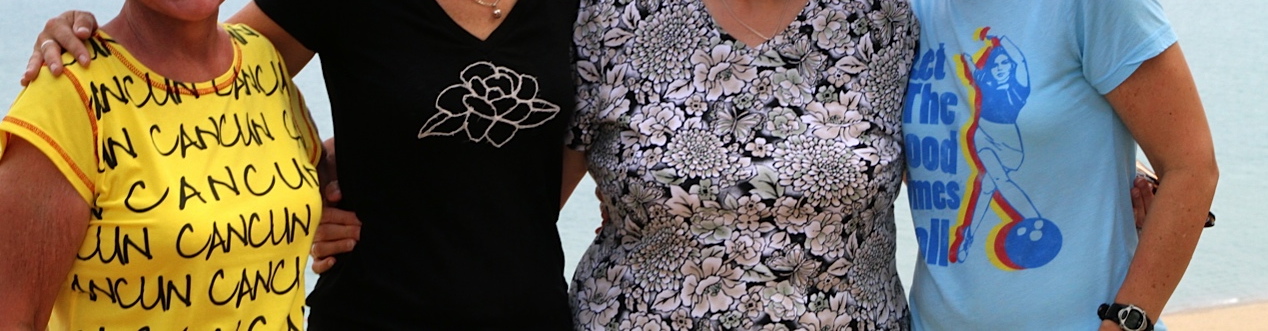
In one of my favorite photos from when my mother met my birth mother last August, the four of us are standing at the top of Mt. Baldy in the Indiana Dunes, our arms linked. My birth father is on the other side of the camera. Lake Michigan spreads behind us, so pale in the photograph that it is difficult to determine where water ends and sky begins. My birth parents raised their family not far from the Dunes, and they’ve crested Mt. Baldy a dozen times. My sister and I grew up farther south in central Illinois, separated from them for the first twenty-five years of our lives by two hundred miles of sand and prairie. Given the information that we each had from the adoption agency, we likely could have found one another on a compass. We pointed south; she pointed north. And we would have been right, not necessarily close, but still right.
My birth mother remembers rolling with her children down the southern slope of Mt. Baldy, and when we arrived at the base last August, she was disappointed to find access to the former trail blocked by plastic fences, forcing us to take another, more roundabout route to the top. Too many feet, too little Marram grass taking root, and the mountain she knew has begun to slip. It was hot and humid and the mosquitoes dive-bombed us as we trudged single-file up the thick sand along the new path. “Isn’t this something?” my birth father marveled from his anchor position at the end of the line. “Who would have thought? All of us together like this?”
The view from the top was both magnificent and disorienting as the sand stretched and swooped in long curves that reminded me more of a Middle Eastern desert than Indiana. My kids turned their bodies into logs and went rolling and giggling down the hill. When they reached the bottom, they were such miniature versions of themselves that I couldn’t make out their features although I knew exactly who they were.
The picture of the four of us at the top of Mt. Baldy is disorienting, too. When my sister showed it to a friend of hers, she asked her friend to guess which woman was our birth mother and which was our adoptive mother. The friend guessed wrong. She showed another friend. Wrong again. In fairness, there is no obvious answer in this photo. My sister and I do not look like our birth mother. If you saw us together, you would not cluck your tongue, the way people still do when my sister and I are together. “You must be sisters,” they say. We must be sisters because we look alike. There is an insistence to biology, a confirmation of it, when you bear the proof in your face. The only proof in this photo lies not in our faces but in our touch. My sister and I are both leaning into my mother. My mother’s shoulders are tucked under our arm pits in an unmistakeable familiarity. Our heads are bent toward hers. We tip toward what we know.
If we don’t resemble our birth mother, then maybe somebody else? “You look so much like Grandma D.,” my birth family tells me, and I beg for photos, eagerly await them. When the photos of a youthful Grandma D. arrive, I don’t see what I’m supposed to see. I search the eyes, the nose, the mouth, but I don’t recognize anything. I’m surprised by my disappointment, as if sharing features with this woman who never knew about me would somehow undermine the secret of my existence, long after she had died.
My birth mother’s niece sends photos from the other side of the family. In one old brown photograph, she recognizes my middle son in the face of a somber, blonde child with dark eyes. I look and look and look, but I don’t find my son. She finds other connections in eyes and lips and smiles, but I don’t see them, either, and neither do her daughters. If you have to look that hard, I ask her, are you merely seeing what you want to see? “You are who you are,” she replies kindly, with understanding. “You are the product of your family.” And I know she means my family, not hers, though biologically, we are first cousins. In the past, I’ve poured through photographs of my mother and father’s families, of ancestors I’ve never met, of ancestors who don’t belong to me but do. I can show you the slope of a nose or the brown pool of an eye or the height of a hairline that might fool you into thinking that we shared genes. For most of my life, this was my most fervent desire: to be so completely theirs that nobody would ever question my place in the family. In the absence of that, I dismissed it all. Except for my twin.
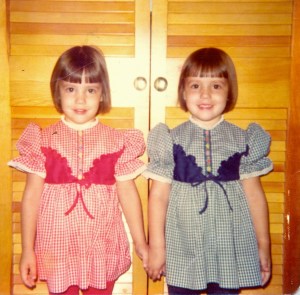
Yes, the paradox with which I continue to struggle as an adopted twin is this: I have spent my entire life denying biology, telling myself and others that it doesn’t matter, that my family is my family no matter what our genes reveal, or don’t reveal, on top of our skin or under it. For me, family transcends biology. I still believe that. Family transcends biology, and so do I. What I have done, what I have become, what I will do: I will myself free from the tethers of DNA. Yet, behind my confidence, my identity, my sure sense of self, is my twin, my biological other. Behind me, with me, in me, is my blood twin. Here I am, still trying to rid myself of this notion of biology, while clinging to it as if it is my lifeline, as if, without it, I would surely sink.
If it weren’t for biology, there would be no reason for us all to come together again, to stand at the top of a shifting sand mountain, red-faced and sweating from the climb but marveling at the view. On the top of Mt. Baldy, my sister and I resemble each other. There is no mistaking that. You must be sisters. We must. Our brown hair is pulled back in identical pony tails. Our matching sunglasses, hers green, mine purple, perch atop our heads in a similar swoop. Our mother is between us, sure and firm and familiar. Behind her back, my sister and I meet, our arms touching. Even with our mothers beside us, we hold onto each other.
Risings
 It is Holy Week, and I am thinking of life and death, and my father. This year, the anniversary of his death falls the week after Easter, but in 2001, April 11 was the Wednesday before. We held his visitation on Easter Sunday and buried him on Easter Monday. Four weeks after my mother laid to rest the love of her life, I clutched her arm and walked down the aisle toward mine. My mother and I stepped forward with steady resolve, our eyes fixated on the crucifix hanging at the front of the church where my husband’s parents were married and where my husband had buried his mother. One of the first things my husband said to me when I met him was “My mother is dead, you know?” We were in a thick of dancers in the living room of our good friend Karen—she’s dead now, too—and we had been drinking too much and he kept circling me, teasing, trying to get a reaction. That was 1999, ten days into the season of Lent. When he told me about his mother, I stepped back, temporarily off-balance from the weight of his words, but eventually I righted myself and a year later, we were engaged.
When my father learned he had terminal cancer, he stopped watching NASCAR—one of his favorite television pastimes—and tuned into home and garden shows instead. I took a leave of absence from my life as a doctoral student in Connecticut and traveled home to Illinois to help my mother and siblings care for him. I knew I couldn’t let him die without my being there. I’ve always had trouble letting things go without bearing witness to the departure. When I was a teenager, my parents and I were halfway home from the veterinarian’s office when I demanded that we return so I could hold our old mutt Ginger as the vet’s assistant put her to sleep. My parents were attempting to spare me the scene of her death, but I owed that dog my presence, a final act of love. And I needed to see it. Otherwise, I knew that, for the rest of my life, I would imagine other (im)possibilities: She had suddenly recovered, bolted out of the office, and attempted to make her way home. I would see her everywhere, in other dog’s faces, in other unlikely places. I would never stop looking for her. I had no idea what it would mean to watch my father die—how utterly shattering it would be to watch him leave the world—but I needed to be there.
One afternoon, not long after I arrived home, my father was watching a pair of television hosts renovate a garden shed as I absently flipped through wedding books on the floor of his hospital room. I wasn’t much for wedding books, or for fairy-tale-dreaming about the “best day of my life,” even without my father dying in the bed next to me. As I scanned the book, I lighted on a page of pew decorations that struck me as beautiful for their simplicity: white paper cones filled with lily-of-the-valley hanging from bent metal hooks. “What do you think?” I asked my dad, interrupting the shed construction to show him the page. He looked down. “Very nice,” he offered, and I knew then that those paper cones would be hanging from the pews at my wedding. It was the first and only time, in all the wedding planning, I said to myself, “I have to have this.”
In one of his last parental acts, my father called a buddy who ran a local machine shop and arranged to have the metal hangers made for my decorations. I bought the paper and the ribbons, and though his fingers were fat with fluids, my father sat in his hospital bed and helped me fold the paper into cones. Later, after we had buried him, after I was back in Connecticut making final wedding preparations, I reminded my husband that we needed lily-of-the-valley for the cones. I had to have the lily-of-the-valley, even though it cost a fortune and he had to get up at the crack of dawn on the morning of our wedding to drive to a remote warehouse in northeast Philadelphia to buy them. Of course he got them. By the time my mother and I made our way down the aisle, though, our faces were tight and we could not take our eyes from the cross. I didn’t even notice the pew decorations. We had only made eight anyway, enough for the first four pews on each side. We ran out of time.
The night my dad died, we passed the hours and fought off fatigue by singing along to a tape of old Lutheran hymns on a portable stereo my mom had set up in their bedroom. Somewhere during the first verse of “Abide With Me,” my dad began gasping for breath. Hours earlier, his last word before he had slipped into a coma, was a question: “Why?” As the space between his choked breaths lengthened, we fought against the horrific violence of his final moments, our voices rising, desperate:

Hold Thou Thy cross before my closing eyes;
Shine through the gloom and point me to the skies.
Heaven’s morning breaks, and earth’s vain shadows flee;
In life, in death, O Lord, abide with me.
By the time we reached the last verse, he was still. We sang that song at his funeral, and weeks later, when my mother went to his grave to see the headstone set in place for the first time, the bells on the nearby cemetery chapel began pealing, the wind carrying “Abide With Me” to my mother, standing over my father’s grave.
Sometimes, the difference between a miracle and a coincidence is the thin stem of a musical note or the thread-breadth of a shiny green plant leaf in the shape of a giant tear drop.
The first spring we moved into our house, I noticed a large patch of lily-of-the-valley sprouting in our side yard. Here in Philadelphia, it grows like a weed, and this year, thanks to a warm winter, it will bloom early, like everything else. Already the pointed pips are poking through the earth. Soon the green leaves will follow, then the delicate white upside-down bells hanging from the stem.
Lily-of-the-valley is sometimes referred to as “Mary’s Tears” or “Our Lady’s Tears.” In Christian legends, the plant springs from the tears of Mary that watered the ground as she wept during the crucifixion. Other gardeners call it “Ladder-to-Heaven.”
I think about my dad often in this journey, how he would have accepted our birth family without fuss, how he would have cradled my sister and me amid the upheaval in his silent but ever sure way. I think about meeting a biological father without the ghost of a deceased father hovering over the moment. Mostly I just miss him, for myself and for my mother. But I don’t weep for him anymore. I am out of tears, the ground beneath me long dry.
Yet, still those blessed flowers grow.
Here they are, this Holy Week, already breaking from the earth.
Here I am, eleven years later, so many more lost, so many more found, still climbing the ladder, my feet on the white bells, clanging out the “Eventide” as I clamor toward the sky.
Mother
Some adoptees grow up in families that never seem to fit right. There may be extraordinary love, but the differences are pronounced, physically and spiritually. In truth, I know biological children who feel the same way about their biological parents and siblings. I have a middle child who I watched drop out of me but who still makes me shake my head in wonder: “Where did you come from?” Some day he may look at me and ask the same question, but I am my son’s answer—and I can prove it.
As a child, I wasn’t troubled by any obvious disconnect to my family, in part because a version of my self slept a few feet away from me for the first eighteen years of my life. Our personalities were not identical, but our spiritual connection was profound. So even though my sister is a braver, hipper, more rebellious variant of me, a breathless similarity to so much of our lives steadied me through all those years of not knowing where we came from. At times in my life I have felt lonely, but I have never been alone. I have always had my twin. My birth mother understood what it would mean for us to have each other. She said it helped her let us go.
In my younger years, the only time I troubled myself over differences between my parents and me was when it came to books. My sister and I devoured them (but then, so did our brother). Our parents mostly stuck to newspapers, the Bible, and their Portals of Prayer. One summer day when I was in high school, I was lounging in a chair on our back patio, novel in hand, trying to explain to my mother what it was to love books as much as I did, how I could spend that entire day immersed in the world of this particular story. She looked down at me from her perch on our back porch and chirped, “Not me!” She certainly encouraged my appetite for books and fed it regularly with trips to our hometown library, but she didn’t share it. I bet my birth mother loves to read, I thought to myself in frustration, then immediately regretted even thinking it. I loved my mother, and I loved books. I didn’t need them to love each other. Besides, my sister understood. Still, I wondered. Did my birth mother spend as much of her life buried in books as I did? (Yes.)

Mom and me, Gateway Arch, St. Louis, 2012
Last week my mother and I spent a couple of days together in St. Louis; I was there to attend a rhetoric conference, and St. Louis is one of her favorite cities, so she eagerly joined me. We hadn’t spent that much time alone together in a decade. With time to spare the day before the conference began, we decided to tour the Anheuser-Busch Brewery. At the end of the tour, we headed into the sampling room, and I stood in line to try a Shock Top Belgian White while my mom filled her cup with Diet Pepsi. My mother’s distaste for alcohol is notorious. She never touches “that stuff.” I made her try a sip of my beer, though, and she declared it “not as bad as I thought it would be.” Later, she talked me into riding a little white space pod to the top of the Gateway Arch. I’m terrified of heights; they’ve never bothered her. It wasn’t so bad, even as the wind rocked the floor under our feet. We peered through the rectangular eyes at the beautiful city spread below us. “There’s Busch Stadium!” she said, directing my gaze below. My mom is a staunch Cardinals fan; I root for the Cubs, for anything Chicago, because that is where I was first.
In many ways, my mother and I are so different. We don’t eat the same food. We don’t enjoy the same music. We don’t share political beliefs. We worship the same God but in different denominations. People love my mother, love that she is friendly, down-to-earth, genuine, giving, faithful. I love her, too, for those reasons and many more. But there’s no doubt about it: We think, work, play, pray, cook, clean, and vote to the beat of our own, different drums. When I met my birth mother a few years ago, my husband told me, “Ah, now I understand where you came from!” At first, I bristled at his words, but I knew he was right. My birth mother and I share many personality traits, many hobbies, many passions. But we don’t share the first four decades of my life, and that is significant. My mother is my mother.
While visiting my birth family last month, my birth father wondered aloud what the impact of our growing relationship might be on my mother. He worried she might feel threatened by it. “No,” I assured him. “She’s fine with all of this.” I could tell he didn’t believe me, not entirely. Surely, she must have some concerns, some fears, he offered. Only that you will inadvertently hurt me, I thought but didn’t say. My birth father is not only a birth parent but also a biological parent and an adoptive parent. He, my birth mother, they have lived all three roles. “No,” I said emphatically. “My mother doesn’t feel threatened.” No, I said, with conviction, because I just know, because she is my mother. Ask her.
From the beginning, my mother has been a part of this journey. Four years ago, I requested her permission to search for my birth family, promising her I would not do so without her blessing. She didn’t hesitate for a second before giving it, and while I had asked, I knew all along what her answer would be. When, less than a year later, the confidential intermediary called to tell me that she had located my birth mother, I nearly rushed her off the phone. I wanted, needed, to call my mother. I have called her every step of the way. We’ve never stopped talking because if there’s one thing we share, it’s honesty. It’s important to my birth mother that I include my mother–one of the first things she asked the confidential intermediary was if my mother knew about my search and if she was okay with it. I suspect that if my mother hadn’t been okay, my birth mother wouldn’t have agreed to have contact. In order to protect my mother, she would have let me go.
Earlier this year, I was in a dark place in this journey. I was miserable, hurting. One night I called my mother, sobbing. My tears startled her. She’s the crier, the one we kids nicknamed “Weeping Willow” for her propensity to break into tears in church. I rarely cry. But the pain was immense, and I could barely breathe. She talked me down. She swaddled me with her love and reassurances. In the end, I knew it would be okay—because no matter what, I had my mother.
When she dropped me off at the St. Louis airport last week, I thought about how, just a month earlier, my birth mother had ushered me off from another airport. I said good-bye to my birth mother with a tumult of emotions that is hard to describe. I know they both love me deeply, and to be so loved by two mothers is a gift that both moves and humbles me. But, it was much easier to leave my mother in St. Louis. I know she’s not going anywhere. I know that no matter what happens, my mother is not going anywhere.
When I said good-bye to my mother in St. Louis, I wrapped myself in an embrace so familiar I can call it to mind now, the press of her arms against mine, the soft curve of her shoulders, the smell of her skin against my cheek. As we stood on the gray edge of the airport curb, I wrapped myself in her love, in the knowledge that this mother, no matter how different we may be, will never leave me.

Mom and me, City Garden, St. Louis, 2012
Case Notes: Coda
My mother greeted them first, as she was meant to. To some extent, she lays more claim to them than I do. They were there in the beginning, in her beginning, before my sister and I were. “If I passed them on the street, I wouldn’t know them,” she said matter-of-factly, relinquishing memory to the four decades that had passed since we were all together. But after they crested the stone steps in front of my house, my mother threw her arms around their shoulders, uttering cries of recognition, while I hung back in the blank of my own recollections.
In the early days, one of them advised my mother to say the words, “I’m so glad we adopted you,” every time she lifted us from our cribs. And so, before those words framed any real understanding in our minds, she did. By the time we understood the word adoption, it had already become a familiar echo, tied to her happiness. I’m so glad.
By the time we understood the word adoption, we also knew Bunny’s name. She was the Lutheran Child & Family Services caseworker assigned to my parents, the one who watched my mother and father rise to the top of the agency’s list of prospective parents as my sister and I also rose on the list of soon-to-be-born babies. She prayed hard that we would all arrive at the same time, and we did. Bunny left the agency shortly after our parents brought us home, and Judy took over, monitoring the remaining home visits until our adoption was legalized.
As a child, I whispered Bunny’s name with the reverence due a saint. The only history I knew began with Bunny. She was not my beginning, but she was the connection to it, the person who linked me to my birth mother. I didn’t know what Bunny looked like, so it was her name that took shape and became the body that I clung to in the darkness of my past. In one hand, she held the woman who gave me life; in the other, the woman who nurtured it. It was a case of mistaken metaphor, I learned only recently. Bunny never knew my birth mother although they attended the same college; my birth mother had her own caseworker, whose name none of them remember. But over the years, my misunderstanding about Bunny’s role provided me solace, much as the untruths about my parents consoled my birth mother. What wasn’t true gave us more peace than what was.
When Bunny and Judy arrived at my home for a visit last weekend, I no longer thought of them as conduits, perhaps because I no longer needed to hold onto them in order to touch my birth mother. Now, they were something of an organ transplant team, the ones who had carried me from the arms of my birth mother, not dying but definitely disappearing, to my parents. Maybe they didn’t orchestrate the procedure, but they certainly played a vital role. What they wrote in their case notes mattered, so much so that even now the agency director will not release them, even to my mother.
Bunny and Judy, whose husbands were both Lutheran pastors, remained close friends over the years. I never reached out to either of them although it would have been easy to find them. There was a cowardice to my silence but also a resignation. I never considered asking them to lead me to my birth mother.
Judy could have. She and my birth mother were friends at Valparaiso University where they were both students. They lost touch in January 1969 when Judy graduated from Valpo, shortly before my birth mother moved to Chicago. Only later, while working as my parents’ caseworker, did Judy discover that the woman who gave birth to the twins she was observing in their new parents’ home was, in fact, a good friend. That knowledge, when Judy discovered it, made her feel dizzy, devastated. Her role at the agency made her silent. One day in 2006, she was reading an article in Guideposts magazine that my sister wrote. In the article, which describes her life as a war correspondent in Iraq, my sister mentions visiting the grave of our father during a visit home. Judy gasped in recognition when she saw our father’s name, then flipped to the front of the article to read the byline. The author’s name belonged to one of the twins from long ago; she was sure of it. Then she remembered: She knew our birth mother, too.
On my back patio where we all sat last weekend warming ourselves in the mid-March sun, I asked Judy what she would have told me if I had contacted her. I thought of all those records sealed away, moved just out of reach, the ones I cannot have even now. “What if I had asked you about my birth mother?” I wondered aloud to her. “What if I had come looking for you, asking you what you knew?” She didn’t hesitate for a second. “I would have told you.”
The next morning, after Bunny and Judy left, I opened a small gift from Judy. Beneath a twist of pink tissue was a round glass magnet with a bright green paper dragonfly inside. In an accompanying note, Judy wrote about her love of dragonflies, about how young dragonfly nymphs remain nearly invisible under water as they grow. Only when they emerge into the light do their bodies glow with color. Their compound eyes allow them to see better, farther, than any human. They’re not only beautiful; they’re visionaries.
As we sat in the sun on my back porch, more real to one another than we have been in years, I watched as my own infant body took flight, emerging from a dark, invisible past, into womanhood. I was no longer the baby they last held. They were no longer the mythic shadows I could not, would not reach.
I was flying. I was shining, free.

Jenny and Judy, Philadelphia, March 2012
 Twin Prints: An Adoption Story