Truths

I almost wrote: When I was younger, I thought if I met her someday, I would know the truth. The reality is, I never thought of adoption in terms of truth when I was growing up. In my earlier years, adoption was a fill-in-the-blank form in need of simple answers. Those answers existed, and she held the key, as perhaps did the judge who legalized our adoption and the caseworkers at Lutheran Child & Family Services of Illinois who knew us before our parents did. Only much later have I realized that the first chapter of my life is more multiple choice than fill-in-the-blank, and multiple answers apply. There are stories and there are memories, there are fantasies and realities, and there may be some facts, too, but everything is slippery. Everything is just out of reach.
Here it is: When a life tumbles out in secret and the major players are kept from one another, when parts of that life remain permanently sealed in court files or tucked into medical records that no one can find, when nearly forty years go by before we begin to speak and there are so many of us trying to talk at once, that life may never know a single truth. Over the last few years, I have realized that if the purpose of this journey is to discover the truth, it is an impossible one. It has to be about something else.
When I was younger, the truth I knew began nearly a month after my sister and I were born. We were twenty-three days old when the people we loved began to bear witness, and by bearing witness, brought us into being. On a warm, sticky Friday in early August 1970, a caseworker met my parents in a room at Lutheran Child & Family Services in River Forest, Illinois. My mother does not remember the caseworker’s name, only that she was kind. We forget, we erase, we lose, we transform. The caseworker wanted to know if my parents had any questions or concerns. My mother, whirling with joy, suddenly worried that she would mix us up and we’d forever be “the wrong person.” The caseworker assured her that once she saw us, she would never forget who we were. Once she saw us, we would always be the right person. Just in case, the caseworker advised, my mother could put a bracelet on one of us. For a few more minutes, my mother shook with anxiety: What if she didn’t remember which one of us was wearing the bracelet? But then, two more staff members brought us in, and time stopped for the joy and wonder of our birth. In that moment, nothing else mattered, nothing before, only now and after. Just as the caseworker had predicted, my mother knew at once that she would never forget who we were.
Where was my birth mother when our parents first laid eyes on her babies in that low, brown brick building in River Forest, less than two miles from where my mother had graduated from Concordia Teachers College? Where was my birth mother at this moment of joy? She must have been home in North Dakota by then, must have been home with her mother on the farm, her scar pinching, her face smiling. That’s how her sister-in-law remembers her: a usual self, as if nothing had ever happened, already the horror of her truth beginning to erase it. She must have been home although she doesn’t remember leaving Chicago, doesn’t remember boarding the train and taking it north to the flat farmlands where she began. We forget, we erase, we lose, we transform. But she does remember this: her caseworker had told her that when my mother received the news that we would be hers, my mother was in the midst of baking a pie. In my mother’s jubilance, the story goes, flour flew everywhere, covering the phone. For years, my birth mother comforted herself with this image. In the first letter I ever received from her, she wrote, “I don’t know why that was so important to me but I imagined a mom who was home and baking. I held this image in my head for years and it brought me some comfort.”
Only it wasn’t true.
Although my mother is a woman of many talents, cooking is not among her passions. She does not make pies from scratch. Her signature cookies come from a boxed cake mix. The story of the pie and the flour: not true. The story of the elation: true.
My father, my birth mother was told, was a pastor. My birth mother found peace in that fact, but it also held her back: She told herself she could never reclaim us from a pastor and his wife, from an entire flock of people in a church. A pastor? That was as good of a paternal start as anything, a profound assurance that we would be raised in a Christian home. One time, she hatched a plan, sure that if she could just set eyes on us in a school yard, or a church, she would be content to know that we were well: She would visit every Missouri Synod Lutheran Church in downstate Illinois. She would find us.
She might have found us in a church, but she would not have found my father in the pulpit. He was a pipefitter, not a pastor.
Is that what they said? Is that what she heard?
Does it matter?
My birth parents weren’t who I thought they were, either, not according to the non-identifying information passed along to my parents that became the Bible of what I knew to be true of them. In those notes, my birth parents are relayed to my parents as a version of themselves. What a match!
“You don’t swim?” I remember asking her incredulously when we first met. “You don’t play tennis?”
No, no.
“The birth father didn’t know about us?”
No, no.
“You both didn’t attend a Lutheran college? That’s not where you met?”
No, no.
“Are you sure?” I asked, understanding the absurdity of my question. Are you sure that this piece of paper I have in front of me, that I have memorized until I can recite it back to you, are you sure that this piece of paper is wrong?
Is it really you? Are you my birth mother?
For months, I felt foolish. Not duped. I understood how, in the best of circumstances, such inaccuracies may have taken root, especially in 1970, in closed adoption, amid this single-minded focus on placing illegitimate babies with “legitimate” families: My birth mother told her caseworker who told my parents’ caseworker who told my parents who told me. It reminds me of a game we played in elementary school, the telephone game, whisper down the lane. In the worst of circumstances, people just plain lied. But then, somewhere in the middle, is what we wish to be true and what is true, what we say and what we hear, what we want to remember, choose to remember, do. We forget, we erase, we lose, we transform.
Last month, I called the director of Lutheran Child & Family Services to inquire about a tour of the River Forest office when I am next in Chicago, to inquire about a visit to this beginning.
“I know why you’re asking,” she told me, “and it’s not there anymore.”
“What’s not there?” I asked.
“The baby room. It’s all administrative offices now.”
“That’s okay,” I reassured her. “I just want to see the building.”
The pause felt heavy. I was puzzled by the annoyance that hung in the silence.
“Is that okay?” I asked. “If I call you ahead of time, could I see inside?”
“You’d better,” she advised. “If you just show up, they won’t know what to do with you.”
I tell myself: Stop searching. Stop asking questions. You are all here together now. It doesn’t matter. Let it go. It’s not like the truth will save me, or set me free, or anything of that proverbial sort anyway. I’ve had a wonderful life. I insist: I’ve had a wonderful life. It’s just: It’s out there. God knows. The truth is out there. And every day, as soon as the youngest boy is down for his nap and my husband is at his desk in our attic and everything is quiet, I put on my trainers and race down the street, my heart beating against my chest, my legs on fire, mile after mile in an endless chase after something I don’t, may never, fully understand.
Telling
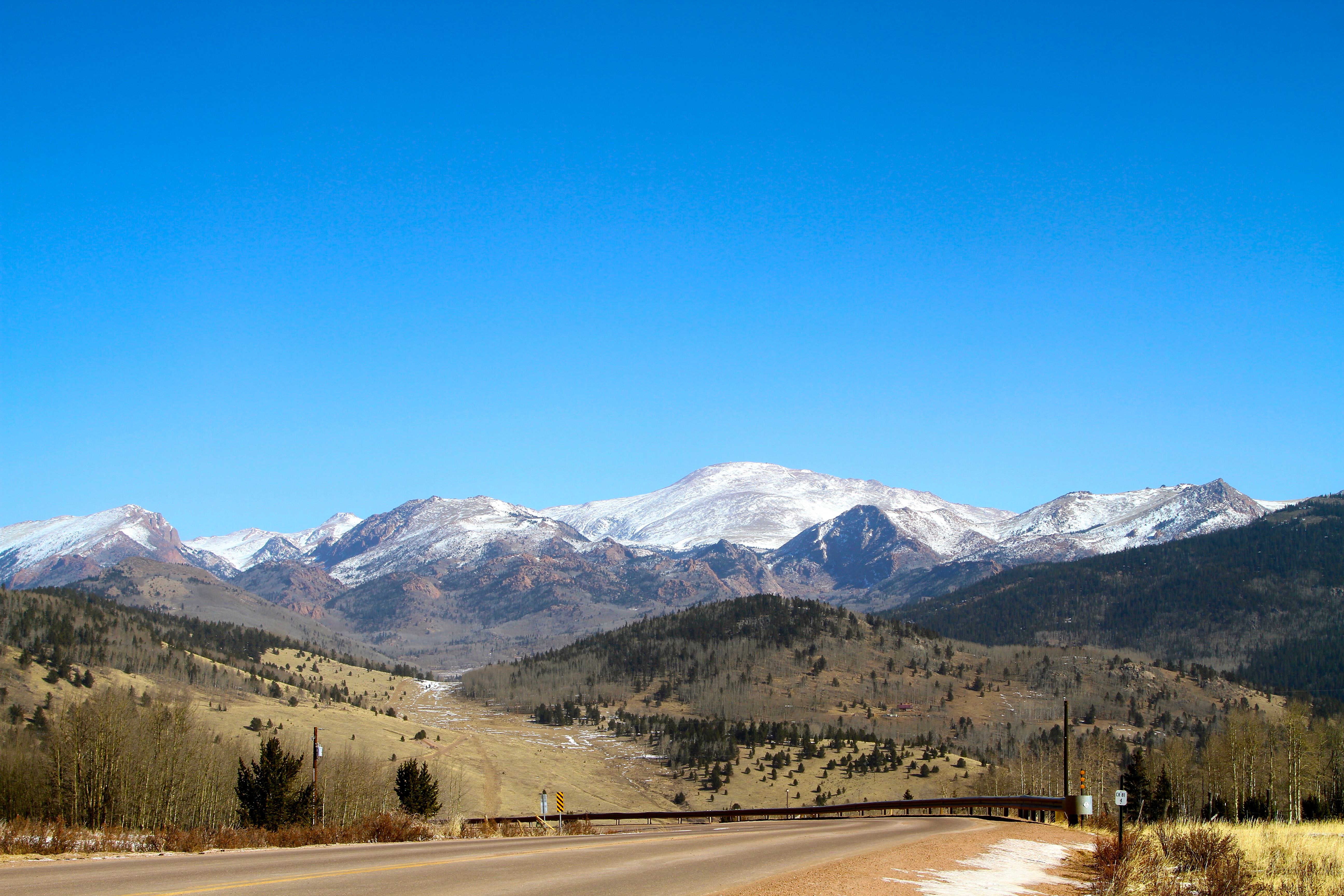
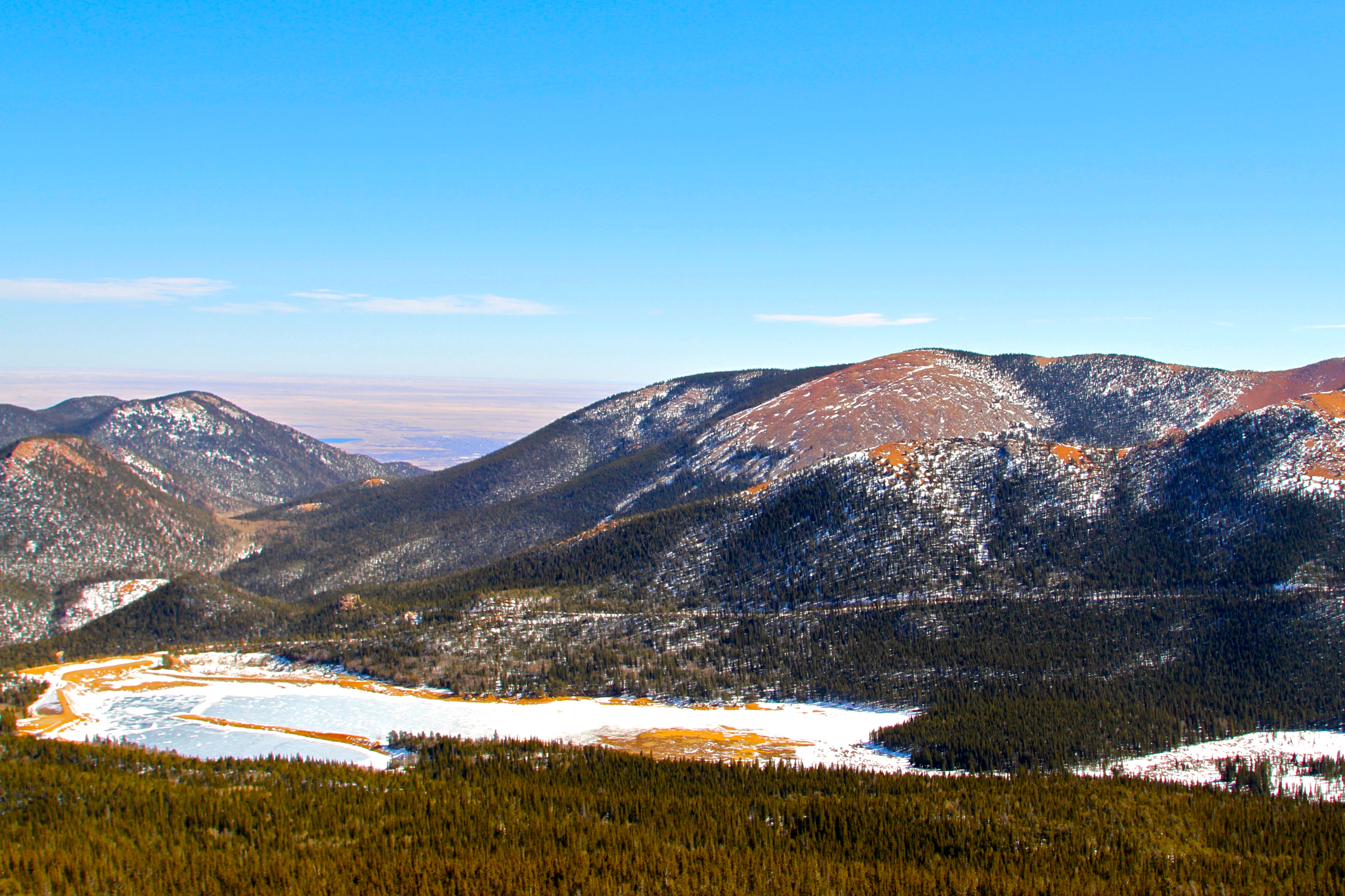
We went as far as we could to the top of the mountain that dominates the backdrop of my birth family’s life. On the edge of their house, their church, their work, the snow-streaked crag of Pikes Peak rises majestically against a deep blue sky. My birth mother and I had caught the cog train in Manitou Springs, riding as far as we could, just past Inspiration Point. At the summit, the winds were whipping over 120 m.p.h. When the train paused before it began its trek back down the mountain, the sky seemed to grow even bluer, and a sharp wind shot a mist of fine snow through the open window and onto our legs. My birth mother had been anxious that the weather would prevent us from getting above the timberline. When we finally cleared the Ponderosa and ancient Bristlecone Pines, she relaxed. “Look,” she said, pointing into the distance. “That’s Kansas.” Beyond that Missouri, then Illinois. I strained to see to the edge of everything.
On the way back down, we traded seats, and views, with the couple across from us. That meant my birth mother and I rode backwards both ways, the train taking us to someplace that was always ahead. It made me dizzy to turn my head to see where we were going so instead I kept my eyes on where we had been. As the train rumbled through Hell Gate and into the boulder fields, we exchanged small talk with our seat mates, asking simple questions that generally garner simple answers from strangers.
“Are you related?” the man asked us.
We paused too long and the question hung there awkwardly. I glanced at my birth mother.
“Well,” she began, searching my face.
“Daughter-in-law?” the man guessed.
“Take off the ‘in-law,'” my birth mother told him.
“Daughter?”
“Yes,” I confirmed. “But it’s complicated. We just met a couple of years ago.”
“She has a wonderful mother,” my birth mother offered.
I wanted to clear the confusion, to explain our hesitation and this game of words. My birth mother could say, “This is my daughter,” but I couldn’t say, “This is my mother.” Yet, I didn’t want to call her “birth mother,” either, to reduce her to this loaded label. I kept referring to her as “she” and “her,” the pronouns erasing her even more.
All the way up, she had been asking, “Do you see? Do you see?” And I kept looking, following the tip of her voice through the open window to the winter emptiness that still managed such beauty. We were a beauty amid words that could not hold us and I wanted these strangers to see, to hear, that, too.
As I struggled to find the right words, my birth mother began to speak. She, this woman who is not my mother but is, this woman who had only recently broken a 38-year silence, began to tell her story to these two strangers on the train. She has wonderful parents. I was there first. There are two of them. They leaned forward into her words, eyes wide in amazement. What was it like? How does it feel? What will you do? They looked at her, at me, trying to keep us both in view at the same time.
She kept talking. We kept talking. You see, her husband is our birth father. You see, he didn’t know until it was too late. You see, they had a son who is our brother. You see, we don’t know what to call this or where we will go, but we are here now.
Twenty minutes later, the train crawled into the station in Manitou Springs. We had all stopped looking at the mountain. “That,” our seat mate said as he and his wife stood up to gather their belongings, “that was the most fascinating story I have ever heard on any train, plane, or car.” We ducked our heads to gather our own bags, smiling.
Out in the bright sunshine, my birth mother and I blinked, almost giddy.
“You just told your story to two strangers on a train,” I told her.
“I did,” she grinned. “Yes.”
“How does it feel?”
She paused. “Fine.” Her whole face glowed. “Wonderful.”
* * * * *
The next evening, my birth parents dropped me off at the airport so I could catch a late flight home. In the rush of last-minute talk on the ride there, I told them that my sister and I always say good-bye by raising two fingers into the air, the sign for “victory” and for “peace.” We did this when we left for college, when I left for my honeymoon, when she left for war, whenever we just left. I tried to explain that my twin and I transcend touch in some ways, that our connection is so spiritual that we rarely feel the need to hug. We speak with our eyes; we speak with our raised fingers; we speak without words into any physical distance that separates us.
But that is my twin. At the airport curb, my birth mother reached for a hug.
“Thank you for having me,” I said, putting my arms around her.
“Literally? Do you mean that literally?” she asked, her voice against my ear.
I pulled away, laughing at the accidental double meaning of my gratitude.
“Yes,” I said. “Thanks for having me.”
When I looked back one more time before entering the airport, she was standing there holding her hand in the air, two fingers raised.
V for victory.
V for peace. 
I Was Born Here
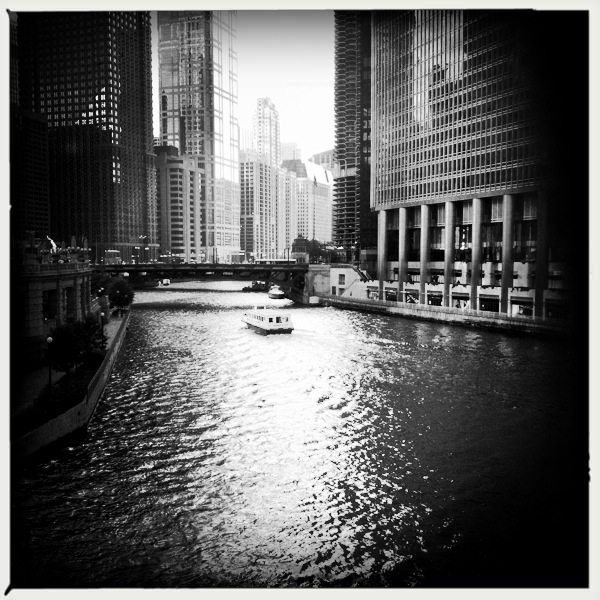
Chicago. Even now, so many years later, I think of this city with such affection, with such longing. The reality is, I hardly know Chicago, not the way I know other cities and spaces where I have spent far more time. But Chicago is a kind of spiritual home for me. From the time I was old enough to understand that I was born there, I latched onto it as solid evidence that I existed before August 7, 1970, the day my parents collected my sister and me and carried us farther south, deeper into the prairie, away from her. I latched onto it because my birth mother had been there at one time, had been there with us, might still be there. It said so on our birth certificate. 5b. CHICAGO. I wasn’t looking around for her as much as feeling around for her. Anything was possible, so everything was.
At some point in my late teens, I found myself in Chicago with my parents. None of us remembers why we were in the city, without my siblings, and not out in the western suburbs where my mom’s sister and her family lived and where we spent so many wonderful summer weekends and holidays as I was growing up. But there I was, alone in the back of our van, trying to locate us on the AAA map, desperate to know this city better than I did, tracing the streets with my finger as my dad drove. Out of the corner of my eye, I noticed a square on the map that marked a nearby hospital and read, “Illinois Masonic Medical Center.” My heart skipped. I knew this was the hospital where my sister and I had been born. I had never been back and now, suddenly, I needed to be there. My voice was a tentative whisper. “Could we go? Could we see it?” Of course we could. My parents didn’t hesitate for a moment. “What do you want to do?” my mom asked kindly once we were inside. I didn’t know. My desire had come on so swiftly that now it felt too impulsive. I hadn’t thought it through.
“Where the babies are kept?” I said. “The maternity floor?”
This is all I knew then: we were born there at 2:08 p.m. and 2:10 p.m. on July 15, 1970. The doctor cut our birth mother open to bring us out into the world. This is all we had been told then: I was born first, weighing 5 pounds, 13 ounces; my sister weighed 4 pounds, 1 ounce. I was 19 inches long; she was 18. I was discharged on July 24 and sent to a foster home. My tiny sister lay in an isolette, warming and growing, for an additional week until she joined me. Our Apgar scores were good. Our color was normal. We cried. “No problems,” my mom wrote in her notes from the caseworker. “All normal.”
Everything else was sealed away, hidden from view.
Here is what we didn’t know: how long my birth mother had been in labor, if she was alone, how long she stayed in the hospital, if she held us, where she went when she left the hospital. We didn’t know how she let us go, only how we were taken.
I felt anxious, furtive. I knew they didn’t want me to be here, whoever it was that closed adoptions and kept the key. I took a deep breath and walked tentatively up to the security guard at the podium between the elevators. “Can I see the maternity ward?” I asked, then added for validation, “I was born here.” He shook his head, “Only mothers and their babies belong on that floor.” I can’t remember anything else about the lobby. I’m not even sure if the elevators were where I see them in my mind, if the walls were really pale green, if there was a podium or a desk, if the guard stood or sat. But I do remember his words, “Only mothers and their babies belong.” I didn’t belong. That’s what I heard him say. I didn’t belong there. I didn’t have a right to be there. I shouldn’t be there.
On our way out, my mother stepped into the gift shop and returned with a white paper bag. “This is for you,” she told me, smiling. I pulled a tiny pink t-shirt out of the bag. It was the smallest shirt I had ever seen, decorated with yellow baby chicks emerging from broken eggs and the words: “I was born at Illinois Masonic Medical Center.” I looked at my mom’s face, so full of love, and mumbled the most sincere thank you that I could muster. I gave her a hug, then stepped away from her, overcome with sadness. I didn’t want her to buy me that shirt. She hadn’t been there; this place was before her. Yet, I was angry at myself for even thinking that, for not being more grateful for what she had attempted to do for me, and maybe for herself: buy back a piece of my birth, give me something that I, we, could keep.
Moments later, my parents and I went back through the front doors with their fat brass handles. I touched them with my fingers, then grasped them with full palms. I wiped myself all over those handles, thinking, She might have touched these. I knew there was no way that her prints were still there, but just in case, I put mine all over those handles, all over the shine that marked the doors in and out of the one place, the only place, I knew for a fact that the three of us had shared.
Over the years, I moved many times, taking that white paper bag with me, never pulling out the shirt until my first son was born. And then, I put it on him, and on the next child, and on the next. All three of my boys wore that shirt. The smallest boy, just a few ounces bigger than I was at birth, was swallowed by it, and when I held him, I held a version of myself, clutching the weight of me in my own hands. It felt good to put that shirt on my boys, even if they were born somewhere else, even if they crawled out of the woman who gave birth to them, and stayed. I was reaching out to her and making it all right with that little pink shirt, now on my own children, whom I was keeping. I was reaching out to her, wherever she was, in Chicago or somewhere else.
She is somewhere else now, far from Chicago, and tomorrow morning, I will get on a plane to see her. I am on a mission of mercy, or grace, trying to establish a present out of a past we never shared, or barely shared. I asked her if she wanted to see anything that I have from my childhood: a Chicago newspaper from the day we were born, the tiny pink dress I wore the day my parents brought us home, my birth announcement, my baptismal bonnet. I don’t know how much I should resurrect this ghost baby who is now grown up, how much my birth mother wants to hold her again, whether she can or should. So I asked first, “What do you want me to bring?” She wrote back, “I want to see and ‘touch’ anything you have from your childhood.”
Into a plastic bag I begin to pack remnants of my earliest childhood: the coming-home dress, the bonnet, the newspaper clippings, photos, my mother’s notes from her caseworker. And then the tiny pink t-shirt with the yellow chicks, now faded from multiple washings. On the front of the shirt, in raised white letters still clinging to the cotton, it says, “I was born.” It says, “I was.”
Rights
In 2008, while driving home from school one afternoon, I was listening to a report on NPR about a famous rapper lobbying New Jersey legislators to pass a law giving adoptees access to their original birth certificates. I remembered Run-DMC from the fog of music that played in the background of my late high school years, but I didn’t know the group well enough—or, more accurately, was never hip enough myself—to recognize DMC’s real name, Darryl McDaniels. In 2006, VH1 had premiered a documentary, My Adoption Journey, based on McDaniels’ search for his birth mother and, as the rapper makes clear in the film, the search to figure out who he was; McDaniels had only discovered he was adopted several years before that. It was this story that McDaniels brought before a New Jersey Senate committee in 2008, insisting that adoptees have a right to their identity. A version of the law finally made it to the governor’s desk in 2011, but Gov. Chris Christie vetoed it. One of the reasons? Birth parents’ right to privacy trumped adoptees’ right to know.
I’ve ingested a lot of news on NPR over the years, but I will never forget the report about McDaniel’s testimony. His impassioned voice played in my head like a record for weeks after, the needle sticking on the word right. I couldn’t get passed it to the next groove. Adoptees had rights? Unalienable rights, the natural, God-given-type? I mean, I appreciated the desire to know names and dates and places, and I absolutely understood the necessity of knowing medical information. But a right to know above all else? Above anyone else? And to what unpredictable, no-guarantees end? I wasn’t yet convinced.
I realize now that I had become the deferential poster child of closed adoption. I was (almost) everything that society and those who worked in adoption in 1970 could have hoped for in an adoptee. I had a terrific family, a fabulous childhood, and an unwavering sense of who I was. Well into adulthood, I never questioned the legal and social system that made my life possible or considered it could be flawed. I submitted to circumstances out of my control, to laws and secrecy, to the need to protect the privacy of my valiant birth mother at all costs, and I played my part in it well.
Be grateful. I was.
Don’t be disloyal. I wasn’t.
Don’t rock the boat. I didn’t.
Say, “It was the hand of God.” It was the hand of God.
With the origins of my birth legally closed to me, with a family that loved me, I took it all as a cue for my own emotional life. Be good. Be quiet. Except it was impossible to shush completely a real longing for information, even as I (re)assured myself that the information didn’t matter at all. When that longing reached the surface, I tamped it down. I hid it from view. There had to be something wrong with wanting what I couldn’t have, with what I didn’t have a right to have.
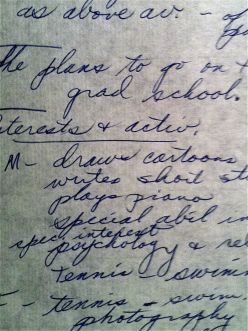 I was in high school when I first discovered the manila file marked “ADOPTION” in the tall tan cabinet beside my parents’ desk in the basement. I remember the trembling in my hands as I pulled it out and the gasp caught in my chest as I realized what was inside. The basement curtains were always kept closed against the sun, so I sat in a beam of light that escaped between one set of striped panels and leafed through the papers. It didn’t occur to me to take the folder to my parents and ask them about it. I figured if they wanted me to see what was inside, they would have shown me themselves. Much of what was in there corroborated what they had already told my sister and me anyway, but there were new details, too, details written in my mother’s hand one summer day in 1970 when the caseworker called to tell her about us.There were pages about my birth mother’s labor and our birth, about our birth parents and their parents, their physical appearances, their hobbies. Piano. Short stories. Photography. Dairy farm. College graduates. Encyclopedia researcher. Credit union. Blue eyes. Green eyes. Dark hair. There was a line, too, about my birth father changing his mind about wanting to marry my birth mother. Went together for quite a while. Intended marriage. Father changed mind after knowing of pregnancy. My birth parents were never married? In my sheltered, evangelical existence, people didn’t have babies out of wedlock; that possibility had never occurred to me. I mouthed the ugliest of words. I told myself, “You are a bastard.” Then I shrugged it off. Later, like a meticulous monk scribe, my sister made copies of all of these papers in her own hand in case the file disappeared some day. She folded her copies–pencil on notebook filler–into a fat square and hid them under her mattress. For years after, we kept silent about our find, always careful to replace the file exactly as it was so that my parents wouldn’t know we had touched it.
It was information. It was powerful. It meant the world to us.
It changed nothing.
We went on. We went on following an unspoken rule that this information, whatever we had, was not really ours to own, or rather owning it, confidently, brightly, was a sign of disrespect, ingratitude.
Only recently have I reached a new understanding, a new frustration over the silence and the denial. I confront it every time I am turned away from a piece of information about my own life.
A couple of weeks ago, my birth mother sent me an e-mail in which she told me, “I am not sure I have ‘a right’ to be in your life.”
I wrote her back. I told her that at this point we were beyond “right.” Now we’ve arrived at “want.”
To some extent, it feels like the riskiest place of all to be.
Heritage
My life doesn’t allow for much television watching these days. In fact, we recently took the plunge and canceled our cable service. My one indulgence is Masterpiece’s Downton Abbey series on PBS, which I catch every Sunday night by artfully arranging the antenna hooked to our kitchen TV. One of the series’ running plot lines has to do with who will become the next heir of Downton Abbey. The characters face all sorts of changes at the beginning of the 20th century, but no one seems to question the laws of primogeniture that lock them into fates over which they have no control. They may grumble about and sweat over the effects of those laws, but they don’t rail against the laws themselves. It’s just understood: In Downton Abbey, as elsewhere, (male) genes matter.

In my life, genes never did. My sister and I belonged to our family just as much as our younger brother, the biological son of our parents. It wasn’t just our immediate family that tucked us into the fold; our enormous extended clan did, too. And we accepted this family back entirely, claiming a heritage that was ours not by reason of birth but by reason of family. Both of my parents were mostly German, and so we became German also. I was proud of who I was, the grandchild of a German butcher whose father started a grocery and meat market in 1912 that eventually grew into a successful meat processing plant that fed my youth with fresh polish sausages and hams. In high school, I studied German because it was our family’s language and because I wanted to be able to read the old Lutheran catechisms and hymnals that my grandparents owned. I attended services each Sunday at the church where my great-grandparents, grandparents, parents, and scores of great-uncles, great-aunts, and cousins attended. From my perch in one of the upper choir lofts, I counted the heads of relatives bent in prayer in their pews, each number ticking off evidence that I was part of something big. Next to the packing plant, my grandpa and his brothers eventually built a bowling alley that we referred to as “the family lanes.” Until the lanes were sold a few years ago, family members who identified themselves at the front counter could bowl for a quarter a game and forego the shoe rental. I enjoyed the perks that came with belonging, but mostly, I enjoyed the belonging.
A friend and I were talking recently about her daughter M., who is adopted from China. My friend is also German; her daughter is Chinese. I’ve always been impressed by the courage and maturity behind little M.’s questions to her mother about her biological roots as well as my friend’s responses. But my friend and I also acknowledged that M. never had the choice to disappear into a heritage of choice. M. doesn’t look like her mother. She wears her difference from her mother upfront, in her beautiful Chinese face. I, on the other hand, could be my adoptive mother’s biological daughter. People assumed I was.
They certainly knew I belonged to my sister. The important fact of the matter: Biology slept six feet from me, in her own twin bed, every night for the first eighteen years of my life. She was the mirror in which I saw another version of myself. She was there from the beginning of the tree that roots from me.
We grew up in a family that talked about its history, that embraced it, that wrote it down. Our paternal grandmother spent years creating extensive genealogical records of her and our grandfather’s families, and after she died, I inherited boxes of her research. Often when we visited, her giant paper tree would be spread out over her dining room table where she was penciling in data. I loved to trace my fingers along that tree and find myself in the branches. Being adopted made its mark on me in other ways, but never here; I never once questioned whether I had a right to be on that tree or to claim that family history as my own. My heart ached at times with the sadness I felt for my birth mother, but it never ached for an ancestral line, for a heritage other than the one that already laid claim to me. In college and graduate school, I wrote narrative essays and poems about the most colorful of the characters in my paternal family tree: the great-grandfather who set minor league baseball records in the Southern League; the great-uncle who flew bombers in World War II; the great-aunt whose father forced her to surrender her four children for adoption when her husband suddenly died. I often drove my grandmother back to the small dot of a prairie village where she grew up, sitting in the car as she wrapped me in stories of her childhood. We visited the cemetery where her parents are buried, and we placed our hands on their small, weathered tombstones to let them know that we had come. She told me stories of more distant ancestors, the farmers and the Union soldiers and the very distant relative who served in President Lincoln’s Cabinet. She gave me these stories to tell my own children.
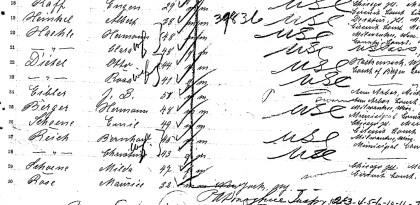
When I visited Ellis Island as a young adult, I spent hours at the computer banks where you can search the passenger lists, excited to find records of my maternal ancestors’ passages from Germany to America. Years later, my sister and I holed up in the Family History Library in Salt Lake City, Utah, searching for more names, happy to bring back copies of what we found to show other family members. I vowed that one day I would visit their home cities in Baden-Württemberg; I still yearn to travel there some day. Several years ago, one of my mom’s cousins created a mammoth family history project, recording everything she could learn about the family’s early beginnings. In the introduction to the book, she tells all of us descendents that “Part of your history and heart is rooted” in this family. My history. My roots. My family.
One of the challenges that comes from finding my biological family is re-examining the psychological principles–biology doesn’t matter, chief among them–that have guided my life for almost forty years. My parents told me that biology didn’t matter as a way of saying unequivocally, you are ours. Adoption law in Illinois said the same thing when it erased my biology, impounding my roots and rewriting the certificate of my birth. I said it because it made me feel whole.
How can I suddenly stop saying that now?
Yet if biology doesn’t matter at all, what else would compel complete strangers to come together to forge relationships? I enjoy listening to my biological family’s stories and hearing about their own colorful ancestors; I am fascinated by similarities and coincidences. My biological family is predominantly German, Swiss and Acadian. I recognize the smart, thrifty, hard-working, Lutheran Germans in my biological mother’s family. There’s royalty in my biological father’s lineage–and a pipe fitter, just like my dad. There’s a family castle, family champagne. Biologically, I have “the blood of a soldier in my veins” and am eligible to be a United Daughter of the Confederacy.
It’s still overwhelming for me, though, to think of myself as somebody else, somebody new, somebody with DNA coursing through her veins that ties me to people and stories other than my own. Nearly three years later, I find myself mixed up, pulled in different directions, fearful that my interest, or lack of it, will be misread or cause hurt. These stakes set me on a tightrope where I teeter precariously. At this point in the journey I’m here: Biology somehow matters but it’s not the trump card. For me, the surest pull, the sharpest tug, is love. More than anything, it is love that courses through my veins.
There is a spot for me in two trees, but there is only one of me. Where do I set my foot and begin to climb? Where do I grasp and look for a place to balance? I start with the stories they choose to tell me. My birth parents, their biological son, their adopted children: They are a family, just like mine. They are a family, just like mine, in which, ultimately, love matters more than biology. They are who they are because of each other. Who are they? What made them? How? They come with other sisters and brothers, aunts and uncles, cousins. They come from other places, other towns and farms. Who are you? Who am I?

Last August, I asked my birth father to take me to the graves of his parents. We drove to the cemetery, my family following his, each of us in our own cars. Under a cloudy summer sky, he paused along the road inside the cemetery and got out of his car. We all emerged behind him. My birth mother bent to pick weeds from the grass growing up around the tombstones while my mother stood chatting with her. I stood over the graves of my birth father’s parents, my biological grandparents, and said softly to myself, “You don’t know me. Here I am. Hello.”
Naming
In September 2009, I met my birth parents for the first time at our home in The City that Loves You Back. My youngest son was just over three months old, and I was still in a sleepless fog, exhausted and on emotional overdrive. I stood at the front door waiting for their rental car to pull up, narrating the moment to myself in whispers: “You are about to meet your birthparents. You are about to see their faces. You are about to hold them. Here they are.” There were hugs, no tears, as my children buzzed around us, interrupting gazes. I needed time to stop so I could catch my breath. I needed everyone else to disappear but them. But time didn’t stop and everyone else was still there, so I shifted into Gospel Martha mode–kitchen to patio, patio to kitchen, cooking, serving, cleaning. My seven-year-old son played Mary, working the crowd in his soft shy way, completely unaware of the moment, yet totally aware. At one point in the evening, I brushed past him with a tray of dirty dishes, headed into the house. He followed me inside. “Isn’t it neat?” he beamed. “Now you have two mothers!” I caught myself from snapping a reply, a guttural, reflexive kick rising deep inside. “What do you mean?” I asked, forcing a smile. “I only have one mom. Grandma.” He eyed the woman out on the patio, holding the baby who looked so much like me when I was that age, then glanced back at me. “Okay,” he said, shrugging his shoulders. “It’s just, there are two.”
When I was a kid, I shook my head at the ignorance of those girls in my grade who asked, “Who is your real mother?” I see myself now, hands on hips in that pink-tiled bathroom in my elementary school, begging for clarification about what makes someone a mother. None of us knew then what it took to be a mother, how exactly a baby came to be inside a mother, or even how it came out. So what makes a mother real? I demanded to know. How is it that this woman who has cared for me since I was not even a month old, this woman I call Mom, this woman I love as Mom, how is it that she is not real? I see those girls still, shrugging their shoulders, unable to answer my question and yet so sure, so confident, that my mother was less real than theirs because I was adopted. I was never ashamed of being adopted, never really cared, but at that moment, all I wanted was to have grown inside my mother, just like those girls, because it would have been simpler that way, because no one would have doubted that she was my mother.
Years later, a graduate student in women’s studies classes, I started to say things like, You become a mother when you nurture a child, not when you give birth to it. A father is not a father simply because his genes are a part of your DNA. A father is a father when he teaches you how to throw a softball, to get a broken key out of an iced door lock, to build a snow fort, or to pack your luggage so that you don’t have to ask anyone else to carry it for you. “What then,” one of my classmates queried, “do you call the person who brought you into the world but didn’t raise you? What do you call the people responsible for your life but who aren’t in it?” We were all about labels then. We understood the significance of naming, the impact of language. I thought for a moment. I thought for a week. I thought for months, and years. What do I call them?
For a while after, I said, birth woman and birth man.
When I was young, I said, the woman who had me. When I wrote her a letter that I tucked under my mattress, I addressed it, “Dear Lady.” I called him, the man. I called the other ones, Mom and Dad.
It doesn’t matter. It does. It doesn’t. It does.
I just forced myself to get through Nancy Newton Verrier’s The Primal Wound: Understanding the Adopted Child (1993). I’ve picked up this book and put it down several times over the last few years. It’s canonical reading in the world of adoption literature, but I resist it. I don’t dismiss it, not entirely, but I resist it for myself. Here, in a nutshell, is Verrier’s theory, in her own words: “all adoptees suffer a primal wound as a result of their separation from their first mother.” The adoptive mother Verrier refers to as “substitute mother.”
I get it. Labels give order to our world. They shape our psychologies and guide our actions. There is a real mother and there is someone else. There is a birth mother and there is an adoptive mother. There is the woman who pushed me into the world and there is the woman who caught me.
I think, if adoption teaches us anything, though, it’s that life, and love, are bigger than the smallness of our human understanding. There are no words that can adequately hold the enormous experience of our various roles in the adoption experience. We bumble along with mere adequacies. It’s not the mothers who become substitutes. It’s our words for them.
When I gave birth to my second child, I wondered how in the world I could ever love a child as much as I loved my firstborn. Here’s what happened: My love grew even bigger. It grew beyond what I could have imagined. Eventually it grew to include a third child, too.
There is room in my heart for all sorts of mothers and fathers, whatever I, you, we call them. That’s what it comes down to. Right now, the people who accept it all without any confusion, who accept it just as it is, are my young children. I follow their lead. Yes, I follow my oldest son out of the kitchen into the darkening evening. There I find my birth mother–I call her that now because it is easier, because people know what I mean, because nothing else fits my own heart as well–I find her holding the baby, bouncing the baby, shushing the baby, who looks just like me.
Many states away is another mother. Many states away is the mother. The year before, she had blessed this journey with courage, love, and grace. Late in the evening, after my birth parents had left for their hotel, I called her to tell her everything. I couldn’t stop smiling. When she picked up the phone, the first words out of my mouth were, “Oh, Mom.”
Risk
Shortly after my dad died, I came across a handmade card in the top drawer of his dresser. I had been in my dad’s dresser before, mostly to put away his laundry, but seldom in the top drawer, unless at his direction. That’s where he kept the crisp $20 bills he brought home on pay day, the cuff links he never wore, the new brown billfolds and the cotton handkerchiefs that hadn’t yet made it into rotation, and the Kennedy half dollars he never spent. When I close my eyes, I can still feel the weight of the glossy, walnut-stained drawer in my hand as I slide it from its slot; I can smell the wood and new leather, the unopened shine of my dad’s things. In the back of that drawer was a stack of cards that my siblings and I had made for him over the years, including one of my creations drawn on red construction paper. At first I mistook it for a Valentine until I opened it up and read: “Happy Adoptee Day, Mom and Dad. I luv you!” For most of my life, I have insisted, to myself and to others, that being adopted didn’t make an ounce of difference in my life. Unlike adopted kids in earlier times, other places, other circumstances, I didn’t consider my adoption to be an important part of my identity. Rather, it was one of many labels I positioned behind my name: twin, sister, daughter, granddaughter, niece, Midwesterner, Missouri Synod Lutheran, student, athlete, musician, writer, and somewhere in there, adoptee. The list grew as I did, changed as I did: vegetarian, Catholic, East Coaster, professor, wife, mother. Somewhere in there still: adoptee.
 It’s hard to say what part of me is who I am because I am adopted, and maybe that is the reason for my reluctance to attribute aspects of my personality to the fact that I am. I am a quilt of selves, none of which overshadows any other part of who I am. But I can’t deny anymore that being adopted made no difference in my life at all. It did. It does. I understand that when I look at the card I made for my parents to commemorate Adoptee Day, March 17, 1971, the day that we legally became theirs. In my crayon rendering of that day, my sister and I stand beside the judge, dressed in Bible-style tunics with ropes around our waists. We look like sacrifices, like Isaacs on the legal altar. The judge’s words in the bubble next to his head are a warning. There’s risk involved in adoption. There’s risk involved with these two girls. You don’t know who you’re getting, what you’re getting yourself into. Be wary. Be careful.
Was I going for humor? Or was I tapping into an anxiety I imagined for my parents, then took on for myself? Perhaps a bit of both. I’m not sure.
I do know that when I was a child, I worried a lot about being a financial burden on my parents. I never wanted for anything, but there were times when money was tight and we ate government cheese and butter and discounted boxes of food from my dad’s union. There were times when my dad lived away from home for weeks and months, working at nuclear power plants on shutdown in neighboring states because those were the only jobs to be had. I began to think of myself as a liability. Even before those tough times, I worried. My sister and I never asked for anything when we were in stores with my parents, never once resorted to childhood begging for something that caught our eye. We just knew, in words we whispered only to each other, that we shouldn’t ask, that asking for too much of anything might make our parents doubt their decision to keep us. Our younger brother, he asked for things because he wasn’t adopted and he could, and we understood that, too, and didn’t resent him for it. Years later, when I told my mom about these childhood fears, her face crumpled in anguish. I never knew, she said. I would have assured you that there was nothing that would have made us not want you or love you. Why didn’t you girls tell me what you were thinking?
Because children can be irrational. Because adopted children can be silent.
I don’t know.
But this I do: The first few months after giving birth to each of my three children, I lived in constant fear that someone would take them from me. Part of my fear–the part that I connect to adoption–was the knowledge that my babies, so young, would forget me. They would never remember my face as it gazed on them with such love and longing while they nursed and slept. They would never remember that love itself other than, perhaps, as something of a shadow. For the first months of their lives, maybe the first years, it was hard to leave them, even to go out to dinner for an hour or two with my husband. What if I never came back? What if they were gone when I got home? I knew that my panic was drenched in the most unlikely of catastrophes. But tell that to my adopted-nursing-mother-sleep-deprived self, grappling, each birth, with more profound love than I ever thought possible. There is a risk to that kind of love. Take them at your own risk.
There were times, many times, days, months, years, when my birth mother stayed at the back of my mind, so quiet I didn’t even notice her. When this thing called adoption works as my birth mother and parents were promised, that’s exactly how it should be. We go on with our lives. We are loved. We forget what we were too young to remember. Our innocence spares us of the pain.
But it also spares us of remembering another mother’s love.
The Girls Who Went Away
I spent the last few days devouring Ann Fessler’s The Girls Who Went Away: The Hidden History of Women Who Surrendered Children for Adoption in the Decades Before Roe V. Wade. I read the book breathless, with my heart in my stomach, in the way that you read books that aren’t about you but are. Fessler interviewed birth mothers who surrendered children for adoption in the 1950s, ’60s, and ’70s; much of the book is in their own words, which Fessler puts in the context of American culture, myths and mores, at the time. Nearly all of the women interviewed gave up their babies because they had no other choice. Their parents told them to, as did their teachers, priests, nuns, social workers, and nurses. Despite what they were told, that they would “forget” their babies, that they would go on with their lives as if nothing happened, secure in the knowledge that they had given better parents a gift, they didn’t forget. The shame and the secrecy went on for years, decades, eating away at them, intensifying their longing.
I don’t know many details about my birth mother’s story, how she felt when she first learned she was pregnant, what her pregnancy was like, how long she was able to hide it, how she was treated by the doctors and nurses and social workers she met along the way, what it was like for her at the Florence Crittenton Anchorage in Chicago, how she spent those days in the hospital before we were taken from her. Part of me is afraid to ask her these questions for fear of hurting her or returning her to such a frightening, lonely time. Part of me wants to know so that my heart can break for her, with her, as it surely would, my own sorrow standing as some sort of apology, not for causing her pain but for being an unwitting part of it. But it’s her story to tell. Whether she decides to tell that story herself one day, to tell it through me, or to keep it still, it’s her choice.
Fessler’s book makes me sad, but it also makes me angry. I’m outraged by injustices, by the dominant narrative of good mother versus bad mother that directed so much of the advice and counsel the birth mothers were given. I think of the lies that they were told in order to keep that narrative intact. They were not good mothers, could not be good mothers. The good mothers? They were the ones with husbands waiting in the adoption agencies, the ones who would take the babies home and give them better lives.
Last summer in Indiana, we were driving around looking at the homes where my birth parents raised their family. As I sat in the car, my birth mother in the front, my mother in the back seat beside me, I was suddenly overcome with the complexity of what I stood for to these two smart, beautiful, kind women, both good mothers. I embodied the deepest sorrow and the deepest joy. As I read Fessler’s book, I wanted those women to keep their babies. I wanted them not to be forced to surrender them. I wanted them not to be told lies. I wanted society–and everybody in their communities who said and did otherwise–to find a way to make it possible for them to keep those babies if they wanted to keep those babies. I am breathing hard as I read that book because I realize that my happy life was made possible by an enormous sacrifice, by great love, by God Himself, yes, all of those things–but by a whole lot of injustice, too.
Since I was old enough to know such things, I understood the shame and secrecy that shrouded unwed pregnancy at the time that I was born, but because I honored my birth mother for what she did, I never dwelled much on it. I, too, thought it was possible that she could simply go on with her life, get married, have more children, put it all behind her. Still, I wondered if she thought about us on our birthday. I wondered when she fingered the scar on her belly where the doctor pulled us out from her, if our faces suddenly appeared before her. I wondered if she wondered, where we were, what became of us, if we were happy, safe, well.
And then I had my first child. I pushed that beautiful boy into the world, I counted his fingers and toes, I kissed his little nose, I pulled him to my breast, a fierce longing and love welling inside me. When the nurse placed him in my arms–because he was mine and I was keeping him and he was going home with me and there was no doubt about any of that–I burst into tears, for my father who would never see his grandson, and for her. For the first time in my life, I understood something that I don’t need her story, her words, to tell me.
Of course she remembered. Of course she never forgot.

Originals
Around the block from me, in a blue post office box nestled under an old, drooping tree whose roots are now pushing up through the sidewalk, sits my letter to the Illinois Department of Public Health. It includes a check for $15, a copy of my passport photo, and a form whose checked boxes indicate my desire to have a copy of my original birth certificate. The postal worker collects outgoing mail from this box at 11 a.m. on Saturdays. In just a few minutes, my letter will be slung into a white plastic tub and begin its journey west. I don’t expect to receive a reply for some time.

A new law passed last May in Illinois now allows adopted children like me–I’m in the category Adopted Person Born On or After January 1, 1946–to request original copies of their birth certificates. In June 2008, I received an e-mail response from Representative Sara Feigenholtz, one of the sponsors of the bill, then called HB4623. I was working on my “This I Believe” essay for NPR and wanted to find out where adoption law stood in Illinois at that time. In my research, I came across Feigenholtz’s efforts to change the law, efforts that had been in the making, it appeared, for quite some time. She wrote me back to tell me that the bill had been returned to “rules” when the legislature adjourned for the summer. The bill seemed stuck, but she had a plan and sounded hopeful. I didn’t think anymore about it. Less than a year later, I knew who my birthparents were. Somebody else had unlocked the original certificate’s contents to follow the trail since legally I wasn’t allowed to do so. My mind now turns safely to speculation because it can, because I am not waiting for a document to arrive in the mail that could change my life. If I didn’t now know my birth mother, this certificate would, for the first time, reveal her name to me. Would I roll that name over my tongue, whisper it aloud, then be satisfied simply to know those consonants and vowels? Or would her name, and the place where she was born, propel me to look for her? Would my birthparents have heard about this law where they now live, many states away from Illinois? Heard that birthparents are allowed, by the terms of this law, to remain anonymous, to remove themselves from the original, creating something of a ghost original, which really isn’t original at all anymore?
In early December, J., a childhood friend of mine who was also adopted, posted on Facebook that she had received her original birth certificate from the state of Illinois. She already knew who her birthparents were, yet the birth certificate still contained surprises: the name of the hospital where she was born (different than what she had been told), the time of day that she was born. She seemed utterly moved by this piece of paper, to which I had given so little consideration. I shared my joy for her–because it seemed to make her so happy–and then I couldn’t stop thinking about it. I had forgotten all about Feigenholtz’ bill and hadn’t heard about the recently passed law. Should I get mine now, too? I wondered.
I printed out the form and it sat on my desk for nearly a month. When I came across it again, I thought, why not?
I don’t expect any surprises. I’m sending off for this certificate because I can, because it’s mine to have, because there’s a whole paper journey out there that chronicles the first days, weeks, months of my life, and I’ve never been allowed to take it. The scholar in me, who has whiled away many a day in the rare books library at Yale University and the British Library, understands the value, as well as the complexity, of original sources. The birth certificate I have in hand right now is an original copy of the amended birth certificate that my parents received when I was a baby. It’s tattered and worn, and as my husband likes to point out, causes no end of trouble when I need it for official purposes, not because it’s an amended original but because it looks like I’ve been carrying it around in my back pocked for the last 40 years and even sent it through the wash a couple of times. Last night at dinner, my sister, who now lives in Chicago, offered to pick up a new copy of the “real” one for me when she returned home. For a moment I was confused. The one I’m sending away for, I asked? No, she said, the real one, the one that is your life.
I’m not sure what I’ll do with the original one that is not my life that will arrive some time in the mail. My friend J. has hers on her refrigerator. I’ll probably eventually tuck mine away in a green cardboard box in my office where I am saving everything my birthparents have ever sent me: photos, letters, cards. There, I seem to be documenting another original life, one that I didn’t live but one that still matters.
Tentative Steps
It’s been nearly two years (two years!!) since I last wrote here. I understand well that in the world of blogging, such silence is death. In the blogging world, when you stop positing, people stop paying attention. To some extent, I’m relieved, for now, to be under the radar. I stopped writing because I realized that none of us involved in this story was truly ready for a public narrative, that my words were causing harm to the people I least wished to harm. I’ve written in my professorial life about the “ethics of telling,” the personal responsibility that we have to the people in our stories. But it’s a tricky business, of course, writing the story of an adoption; there are so many people in the story, so many secrets, so many places to hide. I’m torn between my desire to write and my desire not to harm–because I’ve realized in these last two years that any words, any at all, will cause some degree of harm, no matter my intention. The only way to “do no harm” is to say nothing at all, to limit casualties to myself. Is it truly a casualty, though, for me to remain silent? Probably not. I could go my entire life and say nothing about any of this, nothing public, that is. I could learn to quiet any compulsion to speak, perhaps as my birth mother learned to do, and content myself with the life before me.
Then there is this: Last August, in a small college town in northern Indiana where my birthparents met, I took my mother’s hand and walked down a flight of stairs in a hotel on the edge of the college campus. At the bottom of the stairs were my birth parents, waiting. My mother went immediately for my birth mother. She threw her arms around her, crying “thank you thank you thank you,” just as she always said she would if she ever had the opportunity to meet the woman who gave us life, who gave us.
Several months later, nothing really any easier than before, I am compelled to take a ginger step back out of the silence through the psalm of thanksgiving. I learn forward, testing the air with my open, outstretched hand, like someone trying to find her way in the dark.
 Twin Prints: An Adoption Story